AFRICOM, National Guard Leaders Engage in Strategic Dialogue

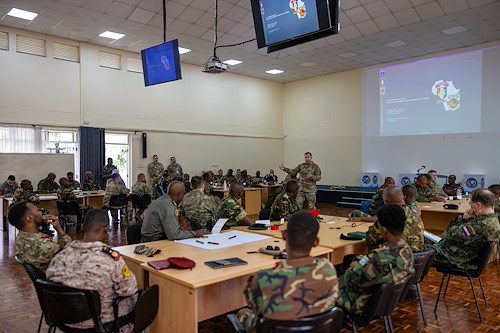
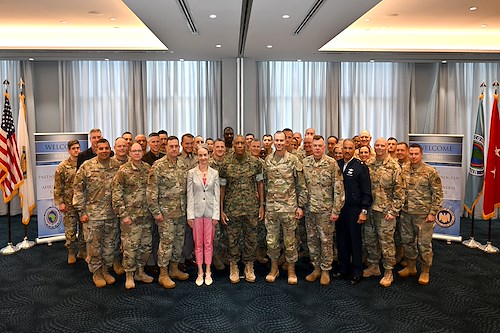
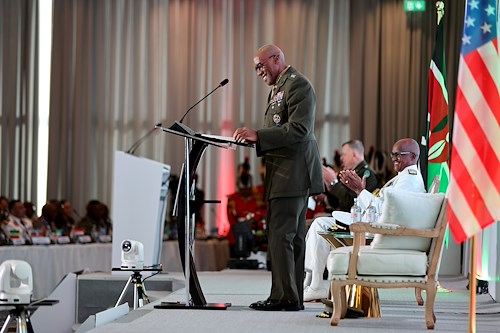
View Gallery Gallery contains 3 images × Photo 1 of 3 U.S. Africa Command U.S. Marine Corps Gen. Michael E. Langley, commander, U.S. Africa Command, speaks at the State Partnership Program (SPP) Adjutant Generals Conference in Nairobi, Kenya May 27, 2025. The SPP Adjutant General Conference unites National Guard Bureau leaders and Adjutant Generals from AFRICOM partner states aligning state-level partnerships with combatant command strategies and solutions to shared challenges across Africa, underscoring the SPP's role in advancing defense objectives and promoting broader military-to-military cooperation. The 2025 African Chiefs of Defense Conference (ACHOD25) brings together Chiefs of Defense from 37 African countries, U.S. Naval Forces Africa, Special Operations Command Africa, U.S. Air Forces Africa, and U.S. Army Africa in Nairobi, Kenya. ACHOD25 provides an opportunity for senior military officials from across Africa to discuss topics such as countering transnational threats, strengthening U.S. and African partnerships, as well as fostering expertise-sharing and alliances. ACHOD25 advances regional stability and collective defense, supporting U.S. national security by promoting cost-effective, African-led solutions that minimize direct U.S. military involvement while enhancing global stability. (U.S. Africa Command photo by Jason Johnston, AFRICOM Public Affairs) Photo 2 of 3 U.S. Africa Command Maj. Gen. Garrick Harmon, Director, Strategy, Engagement, and Programs, U.S. Africa Command, speaks at the State Partnership Program (SPP) Adjutant Generals Conference in Nairobi, Kenya May 27, 2025. The SPP Adjutant General Conference unites National Guard Bureau leaders and Adjutant Generals from AFRICOM partner states aligning state-level partnerships with combatant command strategies and solutions to shared challenges across Africa, underscoring the SPP's role in advancing defense objectives and promoting broader military-to-military cooperation. The 2025 African Chiefs of Defense Conference (ACHOD25) brings together Chiefs of Defense from 37 African countries, U.S. Naval Forces Africa, Special Operations Command Africa, U.S. Air Forces Africa, and U.S. Army Africa in Nairobi, Kenya. ACHOD25 provides an opportunity for senior military officials from across Africa to discuss topics such as countering transnational threats, strengthening U.S. and African partnerships, as well as fostering expertise-sharing and alliances. ACHOD25 advances regional stability and collective defense, supporting U.S. national security by promoting cost-effective, African-led solutions that minimize direct U.S. military involvement while enhancing global stability. (U.S. Africa Command photo by Jason Johnston, AFRICOM Public Affairs) Photo 3 of 3 Massachusetts National Guard Pub U.S. Marine Corps Gen. Michael Langley, Commander of the U.S. Africa Command, speaks to U.S. National Guard leaders during the State Partnership Program (SPP) Adjutant General Conference at the African Chiefs of Defense Conference (ACHOD) 2025 in Nairobi, Kenya, May 27, 2025. U.S. National Guard leaders attended the State Partnership Program (SPP) Adjutant General Conference during the African Chiefs of Defense Conference (ACHOD) 2025 to integrate states with combatant commands’ strategy and share best practices. The ACHOD 2025 brings together Chiefs of Defense from 37 African countries, U.S. Naval Forces Africa, Special Operations Command Africa, U.S. Air Forces Africa, and U.S. Army Africa in Nairobi, Kenya. ACHOD25 provides an opportunity for senior military officials from across Africa to discuss topics such as countering transnational threats, strengthening U.S. and African partnerships, as well as fostering expertise-sharing and alliances. ACHOD25 advances regional stability and collective defense, supporting U.S. national security by promoting cost-effective, African-led solutions that minimize direct U.S. military involvement while enhancing global stability. (Air National Guard photo by Senior Airman Julia Ahaesy) Nairobi, Kenya – U.S. Army Major General Garrick Harmon, Director of Strategy, Plans and Programs, U.S. Africa Command and U.S. Army Major General William Edwards Director of Strategic Plans and Policy, and International Affairs, National Guard Bureau joined leaders from the National Guard units of 13 U.S. states and the District of Columbia for a conference to discuss the State Partnership Program on the African continent during the African Chiefs of Defense Conference, on May 27, 2025.This significant meeting saw representatives from the National Guard engaging on a wide range of topics, underscoring the ongoing commitment to fostering strong military relationships and enhancing security cooperation across the continent. The states and district represented at the conference have established partnerships with various African countries through the State Partnership Program (SPP) that go back decades.The State Partnership Program (SPP), a Department of Defense program, managed and administered by the National Guard Bureau and executed by US Global Combatant Commands, builds long-term, cooperative relationships between states in the U.S. and countries around the world.Established in 1993, the SPP has grown to include partnerships with over 100 nations, focusing on building capabilities, improving interoperability, and fostering enduring personal and institutional relationships. The program leverages the unique expertise of the National Guard to address a broad spectrum of security challenges, ranging from disaster response and emergency management to military education and training. The SPP enables partners to share the burden for security through increasing their readiness with events focused on specific areas which National Guard units can assist. This also increases the National Guard units’ readiness to better prepare them for their wartime missions.Within the African continent, the SPP plays a pivotal role in strengthening regional stability and security. The partnerships are tailored to meet the specific needs of each nation, providing a framework for mutual learning and collaboration. Through joint exercises, training programs, and strategic dialogues, the SPP helps to build the defense capabilities of partner countries, enhancing their ability to respond to both traditional and non-traditional security threats. List of States in Kenya who participated and their African partners:California National Guard - Nigeria District of Columbia National Guard - Burkina Faso Indian National Guard - Niger Kentucky National Guard - Djibouti Massachusetts National Guard – Kenya Michigan National Guard - Sierra Leone/Liberia Nebraska National Guard - Rwanda and Tanzania New Hampshire National Guard - Cabo Verde North Carolina National Guard - Malawi, Zambia, and Botswana North Dakota National Guard - Ghana, Benin, and Togo Utah National Guard - Morocco Vermont National Guard - Senegal West Virginia National Guard - Gabon Wyoming National Guard - TunisiaThe conference in Kenya served as a testament to the enduring value and impact of these partnerships, as National Guard leaders and worked together to discuss common challenges and explore new opportunities for cooperation with their African partners.U.S. Africa Command, headquartered in Stuttgart, Germany, is one of 11 U.S. Department of Defense combatant commands, each with a geographic or functional mission that provides command and control of military forces in peace and war. U.S. Africa Command employs the broad-reaching diplomacy, development, and defense approach to foster interagency efforts and help negate the drivers of conflict and extremism in Africa.For more information, visit our website, Facebook and Twitter pages, or contact U.S. Africa Command Media Relations at [email protected]
Continue ReadingAFRICOM, National Guard Leaders Engage in Strategic Dialogue

U.S. and Kenya Conclude Successful 2025 African Chiefs of Defense Conference in Nairobi

View Gallery Gallery contains 2 images × Photo 1 of 2 U.S. Africa Command U.S. Marine Corps Gen. Michael E. Langley, commander, U.S. Africa Command, speaks to attendees during a closing ceremony at the African Chiefs of Defense Conference (ACHOD) in Nairobi, Kenya, May 29, 2025. The 2025 African Chiefs of Defense Conference (ACHOD25) brings together Chiefs of Defense from 37 African countries, U.S. Naval Forces Africa, Special Operations Command Africa, U.S. Air Forces Africa, and U.S. Army Africa in Nairobi, Kenya. ACHOD25 provides an opportunity for senior military officials from across Africa to discuss topics such as countering transnational threats, strengthening U.S. and African partnerships, as well as fostering expertise-sharing and alliances. ACHOD25 advances regional stability and collective defense, supporting U.S. national security by promoting cost-effective, African-led solutions that minimize direct U.S. military involvement while enhancing global stability. (U.S. Africa Command photo by Libby Weiler, AFRICOM Public Affairs) Photo 2 of 2 U.S. Africa Command Ambassador Robert Scott, Deputy to the Commander for Civil-Military Engagement, U.S. Africa Command and Brig. Gen. Shawn Holtz, Deputy Director for Strategy, Engagement, and Programs, U.S. Africa Command meet with the lead for Madagascar delegation during a pull aside at the 2025 African Chiefs of Defense Conference in Nairobi, Kenya, May 30, 2025. The 2025 African Chiefs of Defense Conference (ACHOD25) brings together Chiefs of Defense from 37 African countries, U.S. Naval Forces Africa, Special Operations Command Africa, U.S. Air Forces Africa, and U.S. Army Africa in Nairobi, Kenya. ACHOD25 provides an opportunity for senior military officials from across Africa to discuss topics such as countering transnational threats, strengthening U.S. and African partnerships, as well as fostering expertise-sharing and alliances. ACHOD25 advances regional stability and collective defense, supporting U.S. national security by promoting cost-effective, African-led solutions that minimize direct U.S. military involvement while enhancing global stability. (U.S. Africa Command photo by Libby Weiler, AFRICOM Public Affairs) The United States and Kenya successfully concluded the 2025 African Chiefs of Defense Conference (ACHOD) in Nairobi, Kenya, uniting senior military leaders from approximately 37 African nations to strengthen partnerships, advance African-led security solutions, and address critical challenges such as terrorism and regional instability, May 28-29, 2025.Co-hosted by U.S. Africa Command (AFRICOM), under the leadership of U.S. Marine Corps Gen. Michael Langley, and the Kenya Defence Forces, the conference facilitated robust dialogue among Chiefs of Defense from across Africa, and other leaders from Naval Forces Africa, Special Operations Command Africa, U.S. Air Forces Africa, and U.S. Army Africa. Discussions centered on counterterrorism, maritime security, civilian-military relations, and strategies to counter emerging threats.“This conference has reinforced the power of collaboration, enabling African nations and the United States to align strategies and build resilient partnerships to tackle complex threats like terrorism and malign external influences,” said Gen. Michael Langley, Commander of U.S. Africa Command. “Our work with Kenya and 36 other African nations this week strengthens our shared commitment to a secure and prosperous Africa.”The 2025 ACHOD featured over 70 bilateral engagements, panel discussions with high-level civilian and military officials in Nairobi, and collaborative sessions to enhance regional cooperation. The event underscored Kenya’s pivotal role as a regional leader in East Africa and built on the success of the 2024 conference in Gaborone, Botswana, by fostering actionable outcomes to promote stability and security across the continent.Langley continued, “This conference serves as a prime opportunity to communicate our renewed emphasis on warfighting and warrior readiness, something we have always aimed for but are putting even more effort on as we work together with our partners in Africa.”The conference also highlighted U.S. initiatives, such as the State Partnership Program and professional military education, aimed at bolstering African security forces’ capabilities. Outcomes included commitments to enhance regional counterterrorism coordination, improve maritime security frameworks, and support African-led peacekeeping efforts.The 2025 ACHOD reached over 150 journalists worldwide, amplifying its message of unity and collaboration. Since its inception in 2017, the conference has been a cornerstone for military leaders to address transnational threats and build enduring partnerships. AFRICOM remains committed to supporting African nations in achieving their security and development goals.U.S. Africa Command is one of seven U.S. Department of Defense geographic combatant commands. The command is responsible for all U.S. military operations, exercises, security cooperation, and conducts crisis response on the African continent in order to advance U.S. interests and promote regional security, stability, and prosperity.For more information, visit our website, Facebook and Twitter pages, or contact U.S. Africa Command Media Relations at [email protected].

Continue ReadingU.S. and Kenya Conclude Successful 2025 African Chiefs of Defense Conference in Nairobi

AFRICOM, Kenya, Kickoff 2025 African Chief of Defense Conference

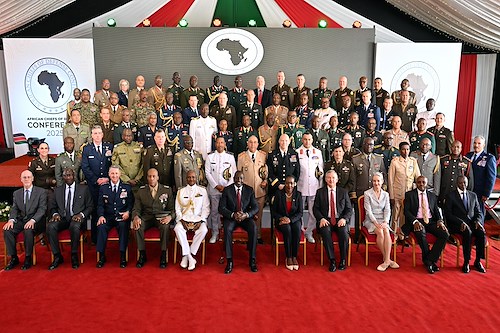
View Gallery Gallery contains 3 images × Photo 1 of 3 U.S. Africa Command His Excellency Dr. William Samoei Ruto, C.G.H., President of the Republic of Kenya and Commander-in-Chief of the Defence Forces (front-center), Chargé d’Affaires Marc Dillard, U.S. Embassy Nairobi, U.S. Marine Corps Gen. Michael E. Langley, commander U.S. Africa Command, U.S. Air Force Gen. Steven Nordhaus, Chief of the National Guard Bureau, and various African Chiefs of Defense and representatives from 38 countries pose for the official group photo of the 2025 African Chiefs of Defense conference, May 28, 2025. The 2025 African Chiefs of Defense Conference (ACHOD25) brings together Chiefs of Defense from 37 African countries, U.S. Naval Forces Africa, Special Operations Command Africa, U.S. Air Forces Africa, and U.S. Army Africa in Nairobi, Kenya. ACHOD25 provides an opportunity for senior military officials from across Africa to discuss topics such as countering transnational threats, strengthening U.S. and African partnerships, as well as fostering expertise-sharing and alliances. ACHOD25 advances regional stability and collective defense, supporting U.S. national security by promoting cost-effective, African-led solutions that minimize direct U.S. military involvement while enhancing global stability. (U.S. Africa Command photo by Jason Johnston, AFRICOM Public Affairs) Photo 2 of 3 U.S. Africa Command His Excellency Dr. William Samoei Ruto, C.G.H., President of the Republic of Kenya and Commander-in-Chief of the Defence Forces (left) greets U.S. Marine Corps Gen. Michael E. Langley, commander U.S. Africa Command and U.S. Air Force Gen. Steven Nordhaus, Chief of the National Guard Bureau, during the opening ceremony for the 2025 African Chiefs of Defense conference, May 28, 2025. The 2025 African Chiefs of Defense Conference (ACHOD25) brings together Chiefs of Defense from 37 African countries, U.S. Naval Forces Africa, Special Operations Command Africa, U.S Air Forces Africa, and U.S. Army Africa in Nairobi, Kenya. ACHOD25 provides an opportunity for senior military officials from across Africa to discuss topics such as countering transnational threats, strengthening U.S. and African partnerships, as well as fostering expertise-sharing and alliances. ACHOD25 advances regional stability and collective defense, supporting U.S. national security by promoting cost-effective, African-led solutions that minimize direct U.S. military involvement while enhancing global stability. (Courtesy upload for Elly Okware) Photo 3 of 3 U.S. Africa Command His Excellency Dr. William Samoei Ruto, C.G.H., President of the Republic of Kenya and Commander-in-Chief of the Defence Forces delivers remarks during the opening ceremony of the 2025 African Chiefs of Defense conference, May 28, 2025. The 2025 African Chiefs of Defense Conference (ACHOD25) brings together Chiefs of Defense from 37 African countries, U.S. Naval Forces Africa, Special Operations Command Africa, U.S Air Forces Africa, and U.S. Army Africa in Nairobi, Kenya. ACHOD25 provides an opportunity for senior military officials from across Africa to discuss topics such as countering transnational threats, strengthening U.S. and African partnerships, as well as fostering expertise-sharing and alliances. ACHOD25 advances regional stability and collective defense, supporting U.S. national security by promoting cost-effective, African-led solutions that minimize direct U.S. military involvement while enhancing global stability. (Courtesy upload for Elly Okware) The United States and Kenya co-hosts the 2025 African Chiefs of Defense Conference (ACHOD) in Nairobi May 28-29, 2025, bringing together senior military leaders from approximately 37 African nations to exchange knowledge, strengthen partnerships, and address shared security challenges across the continent.This year’s conference marks the second time the United States has partnered with an African nation to co-host this premier forum, following the historic 2024 event in Botswana, and underscores Kenya’s strategic role as a regional leader in East Africa. “This conference is a vital platform for collaboration, allowing us to engage directly with our African partners to address layered threats from across the continent,” said Gen. Michael Langley, Commander of U.S. Africa Command. “Co-hosting with Kenya reflects our commitment to supporting African-led initiatives and building enduring partnerships for a safer, more secure continent.” The 2025 ACHOD will focus on critical topics, including counterterrorism, regional stability, maritime security, and the importance of civilian-military relations, with an emphasis on African-led, U.S.-enabled solutions. Keynote speakers and panelists will include high-level civilian and military officials from across Africa, fostering dialogue to advance collective security efforts. The conference will also address emerging threats, such as the growing influence of malign actors and the evolving terrorist landscape, while promoting regional cooperation to enhance stability and prosperity. Since its inception in 2017, the African Chiefs of Defense Conference has served as a cornerstone for military leaders to collaborate on pressing security challenges. The 2024 conference in Gaborone, Botswana, facilitated over 70 bilateral engagements and reached more than 150 journalists worldwide, highlighting its role in fostering dialogue and actionable outcomes. The 2025 event in Nairobi aims to build on this success, leveraging Kenya’s leadership in counterterrorism and regional stability to drive meaningful progress. U.S. Africa Command is one of seven U.S. Department of Defense geographic combatant commands. The command is responsible for all U.S. military operations, exercises, security cooperation, and conducts crisis response on the African continent in order to advance U.S. interests and promote regional security, stability, and prosperity. For more information, visit our website, Facebook and Twitter pages, or contact U.S. Africa Command Media Relations at [email protected].

Continue ReadingAFRICOM, Kenya, Kickoff 2025 African Chief of Defense Conference

Ambassador Robert Scott Joins Obangame Express 2025 in Cabo Verde

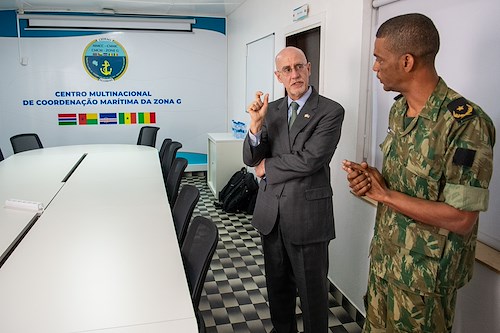
View Gallery Gallery contains 5 images × Photo 1 of 5 U.S. Naval Forces Europe-Africa/ 250514-N-RO855-1352 PRAIA, Cabo Verde (May 14, 2025) – U.S. Africa Command Ambassador Robert Scott, left, talks to Zone G Multinational Maritime Coordination Center Deputy Director, Major Sandro Baptista, during Obangame Express 2025. Obangame Express is one of three regional maritime exercises led by U.S. Sixth Fleet as part of a comprehensive strategy to provide collaborative opportunities to African forces and international partners to address maritime security concerns. (U.S. Navy photo by Mass Communication Specialist 2nd Class Caleb M. Foote) Photo 2 of 5 U.S. Naval Forces Europe-Africa/ 250516-N-RC734-1102 PRAIA, Cabo Verde (May 16, 2025) – U.S. Africa Command Ambassador Robert Scott, delivers remarks at the closing ceremony for Obangame Express 2025. Obangame Express is one of three regional maritime exercises led by U.S. Sixth Fleet as part of a comprehensive strategy to provide collaborative opportunities to African forces and international partners to address maritime security concerns. (U.S. Navy photo by Chief Mass Communication Specialist Joseph M. Buliavac) Photo 3 of 5 U.S. Naval Forces Europe-Africa/ 250514-N-RO855-1357 PRAIA, Cabo Verde (May 14, 2025) –U.S. Africa Command Ambassador Robert Scott, left, talks to Cabo Verdean Coast Guard members stationed at the Zone G Multinational Maritime Coordination Center, during Obangame Express 2025. Obangame Express is one of three regional maritime exercises led by U.S. Sixth Fleet as part of a comprehensive strategy to provide collaborative opportunities to African forces and international partners to address maritime security concerns. (U.S. Navy photo by Mass Communication Specialist 2nd Class Caleb M. Foote) Photo 4 of 5 U.S. Naval Forces Europe-Africa/ 250514-N-RO855-1390 PRAIA, Cabo Verde (May 14, 2025) – U.S. Africa Command Ambassador Robert Scott, gathers with members of the Zone G Multinational Maritime Coordination Center, during Obangame Express 2025. Obangame Express is one of three regional maritime exercises led by U.S. Sixth Fleet as part of a comprehensive strategy to provide collaborative opportunities to African forces and international partners to address maritime security concerns. (U.S. Navy photo by Mass Communication Specialist 2nd Class Caleb M. Foote) Photo 5 of 5 U.S. Naval Forces Europe-Africa/ 250514-N-RO855-1030 PRAIA, Cabo Verde (May 14, 2025) – U.S. Africa Command Ambassador Robert Scott, gathers with members from the Joint Exercise Control Group during Obangame Express 2025. Obangame Express is one of three regional maritime exercises led by U.S. Sixth Fleet as part of a comprehensive strategy to provide collaborative opportunities to African forces and international partners to address maritime security concerns. (U.S. Navy photo by Mass Communication Specialist 2nd Class Caleb M. Foote) U.S. Ambassador Robert Scott, Deputy to the Commander for Civil-Military Engagement, U.S. Africa Command, visited Praia, Cabo Verde, in support of Obangame Express 2025, U.S. Naval Forces Africa’s premier West Africa maritime security exercise, May 13-16, 2025. Scott engaged with multinational partners, observing training events and operational coordination efforts that support regional maritime security and interoperability. During his visit, he met with Cabo Verde’s Chief of Defense, Admiral Antonio Monteiro, to reaffirm the strong defense partnership between the United States and Cabo Verde. The two leaders discussed opportunities for expanded collaboration on maritime security and regional stability. “I commend all 30 countries for their participation and congratulate them on completing a successful Obangame Express 2025,” said Scott. “Your collaboration and shared commitment to maritime security are a testament to what we can achieve together.” Scott conducted four press engagements with local and international media outlets, highlighting the importance of regional cooperation and showcasing the collective efforts of all 30 participating nations. During his time there, he toured key Obangame Express training sites and received a comprehensive briefing during a visit to Cabo Verde’s Maritime Operations Center, where he observed coordination efforts in real-time. “The United States deeply values our enduring partnership with Cabo Verde,” said Scott. “Our cooperation in this exercise reflects our mutual commitment to security, prosperity, and rule of law in the Atlantic maritime domain.” Obangame Express 2025 enhanced regional interoperability and collaboration to combat illicit activities at sea, such as piracy, drug trafficking, and illegal fishing. The exercise supports the Yaoundé Code of Conduct and reinforces shared security goals across West and Central Africa. During the closing ceremony, Scott congratulated Cabo Verde military and U.S. Naval Forces Africa on the outstanding execution of Obangame Express 2025 and their continued leadership in strengthening maritime partnerships across the region. Obangame Express is one of three regional maritime exercises led by U.S. Sixth Fleet as part of a comprehensive strategy to provide collaborative opportunities to African forces and international partners to address maritime security concerns. U.S. Africa Command, one of 11 U.S. Department of Defense combatant commands with an area of responsibility covering 53 African states, more than 800 ethnic groups, over 1,000 languages, vast natural resources, a land mass that is three-and-a-half times the size of the U.S., and nearly 19,000 miles of coastland. Working alongside its partners, AFRICOM counters transnational threats and malign actors, strengthens security forces and responds to crises.

Continue ReadingAmbassador Robert Scott Joins Obangame Express 2025 in Cabo Verde

Winning the Peace through Religious Collaboration

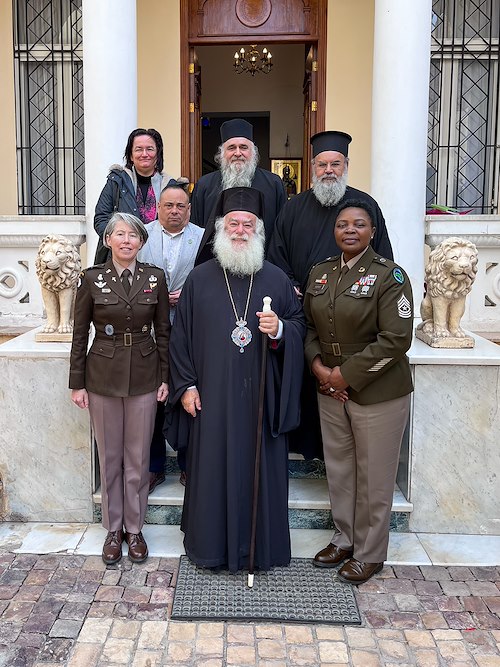
View Gallery Gallery contains 1 image × Photo 1 of 1 U.S. Africa Command The AFRICOM chaplain delegation, led by U.S. Army Chaplain Colonel Karen Meeker, concluded a series of meetings with key religious leaders in Cairo, Egypt, including His Holiness Theodoros II, Patriarch of Alexandria and All Africa, to foster peace and stability across the continent, March 17, 2025. Hosted at St. Nicolas Church, the delegation discussed shared values of resilience and service with diverse faith leaders, recognizing their critical role in supporting vulnerable communities through schools, hospitals, and orphanages in conflict zones. This engagement laid the groundwork for Strategic Religious Leader Engagement (SRLE), including a collaboration with an Egyptian university to train chaplains and religious leaders in conflict resolution and peacebuilding, positioning Egypt as a regional hub for interfaith training. By leveraging the Patriarch’s extensive influence and AFRICOM’s expertise in ethical guidance, this partnership underscores the importance of addressing social, economic, and religious factors to achieve lasting security, with plans for continued collaboration to promote unity, resilience, and mutual understanding across Africa. U.S. Africa Command is one of seven U.S. Department of Defense geographic combatant commands. The command is responsible for all U.S. military operations, exercises, and security cooperation, and conducts crisis response on the African continent to advance U.S. interests and promote regional security, stability, and prosperity. (US. Navy photo by Courtesy Contributor) U.S. chaplain delegation led by U.S. Africa Command Chaplain Colonel Karen Meeker conducted collaborative meetings to bring stability through faith and new avenues of collaboration in support of the warfighter while in Cairo, Egypt, March 17, 2025.Together AFRICOM’s engagement with the Patriarch plays a role in fostering unity, especially in regions facing extreme poverty, disease, violence, drought, and insecurity. The Patriarch has dedicated his life to establishing schools, hospitals, churches, and orphanages in conflicted areas. Regional cooperation with this alliance promotes resilience and fostering unity with a shared vision. “This visit shows how religious leaders can find common ground and work together towards a common goal such as peace and security,” said Chaplain Meeker. “We look forward to continuing this dialogue and exploring opportunities for collaboration in conflict resolution among peoples and nations.” Received at St. Nicolas Church, the team met with His Holiness Theodoros II, Patriarch of Alexandria and All Africa and Fr. Meletios, Chaplain General of the Hellenistic Forces General Staff. His Holiness Theodoros II traces his two-thousand-year lineage to St. Mark. The Patriarch oversees twenty-one archdioceses throughout East, West, North and Central Africa. Their discussions focused on shared values of resilience and outreach to vulnerable communities. This meeting laid the groundwork for AFRICOM to follow-on strategic religious leader engagements. It will also foster a collaboration with an Egyptian University that specializes in conflict resolution and character development. This program has successfully trained Jordanian Armed Force imams with tools to support peacebuilding efforts across the Middle East.“The chaplaincy’s commitment to confidentiality and trust is a model for dialogue, both within the military and across communities.” Meeker noted. “It’s through this foundation that we can have the difficult conversations necessary for reconciliation, healing, and peace.”AFRICOM is exploring how to adapt this model and empower chaplains and religious leaders across Africa with theological knowledge and practical tools for peacebuilding in their communities. This connection with Egypt is a regional hub for interfaith training addressing the conflict with wisdom, empathy, and leadership.“Religious accommodation is a critical component of ensuring all individuals—whether in uniform or in community—can practice their faith freely and safely,” said Meeker. “Our shared work with religious leaders across Africa is not only a gesture of goodwill, but a tangible investment in the future of regional peace.” His Holiness Theodoros II extended a gracious invitation for AFRICOM to continue engaging with faith communities across East, West, North, and Central Africa. These efforts reflect the deep potential of religious diplomacy to complement traditional security strategies. As AFRICOM continues to deepen its partnerships with religious institutions and local communities, the command reaffirms its commitment to inclusive diplomacy, ethical leadership, and a vision of security rooted in mutual understanding.Military chaplains offer spiritual, emotional, and ethical guidance to service members, particularly in high-pressure or combat settings. In addition to providing spiritual support, they serve as trusted confidants and advisors, assisting soldiers’ families and addressing the distinct challenges of military life.U.S. Africa Command, one of 11 U.S. Department of Defense combatant commands with an area of responsibility covering 53 African states, more than 800 ethnic groups, over 1,000 languages, vast natural resources, a land mass that is three-and-a-half times the size of the U.S., and nearly 19,000 miles of coastland. Working alongside its partners, AFRICOM counters transnational threats and malign actors, strengthens security forces and responds to crises.

Continue ReadingWinning the Peace through Religious Collaboration

U.S. Military Chaplains Increase Readiness at SADC Chaplains Conference

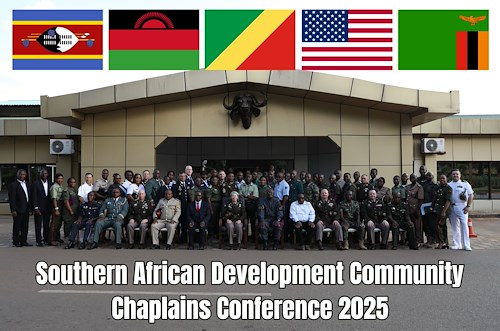
View Gallery Gallery contains 1 image × Photo 1 of 1 Southern African Development Community (SADC) Chaplains Conference in Lusaka, Zambia U.S. Africa Command (AFRICOM) Chaplains actively participate in the Southern African Development Community (SADC) Chaplains Conference in Lusaka, Zambia, April 9 - 12, 2025, uniting military and government Chaplains from across the region. This engagement underscores AFRICOM’s steadfast commitment to regional stability, recognizing that a secure and resilient Africa directly supports global and U.S. security interests U.S. Africa Command (AFRICOM) and U.S. National Guard’s State Partnership Program (SPP) chaplains participated in the 2025 Southern African Development Community (SADC) Chaplains Conference held in Lusaka, Zambia, April 9-11, 2025.The SADC Organization’s conference offered a critical platform for chaplains from across Southern Africa and the United States to exchange best practices in religious support to the warfighter, strengthen moral resilience, and explore strategies for supporting the well-being of service members and their families."Gatherings like this bring together different ideas and experiences that can make us stronger and more efficient Chaplains to better serve our military and community.” said Brig. Gen. Chaplain Henry Matifeyo, Chief of Chaplains, Zambian Defense Forces. “It is an honor and a privilege for Zambia to host this gathering of military and government Chaplains from across the SADC region and partner with our dear friends from the United States.”Throughout the week, AFRICOM and SPP chaplains joined their counterparts from SADC nations in interactive workshops, joint training sessions, and guided discussions on topics ranging from trauma care and moral leadership to interfaith cooperation and crisis response.“This conference reminds us that chaplains are more than spiritual leaders—we are force multipliers,” said U.S. Army Colonel Chaplain Karen Meeker, AFRICOM Command Chaplain. “By coming together across cultures and countries, we expand our collective capacity to care for those who serve.”AFRICOM and SPP’s involvement underscored the command’s ongoing commitment to training with our partners to build capability and increase readiness. The Chaplains training focused on the spiritual and mental wellbeing of the warfighter.“Our soldiers face increasing pressures—both in the service of the [Estwatini] Defense Force and at home.” said Captain Chaplain Bongani Mkhatshwa, Battalion Chaplain of Eswatini Defence. “Through unity and dialogue, we equip ourselves as chaplains to be steadfast anchors of hope, guidance, and moral clarity for the warfighter.”AFRICOM and SPP units remain committed to engaging with African partners to strengthen regional security and the vital institutions that support the men and women in uniform.The SADC Chaplains Conference showcases AFRICOM and SPP’s holistic approach to training with African partners by fostering trusted advisors who promote spiritual resilience, ethical decision-making, and troop cohesion, beyond just military cooperation.Key to the collaborative training environment is the representation of chaplains form across the the total force said, U.S. Army Colonel Chaplain Jonathan Heitman, North Carolina National Guard State Command Chaplain. “Coming together, learning from each other, helps us better take care of our warfighters and their families.”“The State Partnership Program really comes alive at events like this where we have North Carolina Army National Guard and New York Air and Army National Guards alongside our partners here in Southern Africa” said Heitman.The U.S. State Partnership Program (SPP) connects U.S. states with African nations to boost security cooperation through military and civilian exchanges. For Africans, it professionalizes their armed forces and creates economic ties. Chaplains benefit from unique training opportunities, sharing strategies to support mental and spiritual health, and enhancing their role in building resilient communities.“This gathering reinforced the sacred trust Chaplains carry,” said U.S. Army Lt. Col. Chaplain Charles Gilbertson, Deputy Command Chaplain, Southern European Task Force-Africa. “Together, we renew our strength to lead with compassion and to walk alongside those who serve, regardless of nation or faith.”  Military chaplains offer spiritual, emotional, and ethical guidance to service members, particularly in high-pressure or combat settings. In addition to providing spiritual support, they serve as trusted confidants and advisors, assisting soldiers’ families and addressing the distinct challenges of military life.U.S. Africa Command is one of seven U.S. Department of Defense geographic combatant commands. The command is responsible for all U.S. military operations, exercises, security cooperation, and conducts crisis response on the African continent in order to advance U.S. interests and promote regional security, stability, and prosperity.

Continue ReadingU.S. Military Chaplains Increase Readiness at SADC Chaplains Conference

Flintlock 2025: 20 Years of Enhancing SOF Readiness in Africa

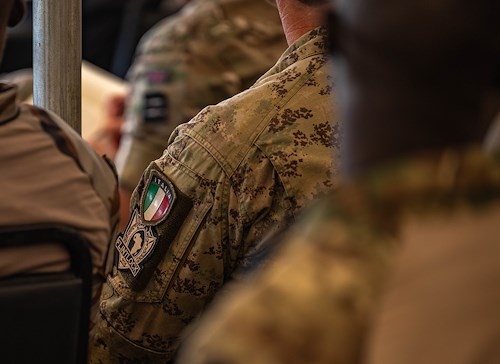
View Gallery Gallery contains 5 images × Photo 1 of 5 Special Operations Command Afric A distinguished visitor from Italy listens to remarks at Flintlock 25’s opening ceremony, April 24, 2025. Flintlock, Africa's premier special operations exercise, unites U.S., allied, and partner forces to build the readiness and lethality essential for achieving peace through strength. (U.S. Air Force photo by Staff Sergeant Zachary Wright) Photo 2 of 5 Special Operations Command Afric U.S. Marine Corps Gen. Michael Langley, Commander of U.S. Africa Command, observes a joint special operations demonstration during the opening ceremony of Flintlock 25, April 24, 2025. During Flintlock 25's opening ceremony, Ivorian and UK Special Forces showcased the lethality and readiness essential for combatting shared threats with a joint raid demonstration, underscoring the exercise's commitment to achieving peace through strength. (U.S. Air Force photo by Staff Sergeant Zachary Wright) Photo 3 of 5 Special Operations Command Afric U.S. Marine Corps Gen. Michael Langley, Commander of U.S. Africa Command, walks with General Lassina Doumbia, Chief of Defense Staff of Côte d’Ivoire, during the opening ceremony of Flintlock 25, April 24, 2025. Flintlock, Africa's premier special operations exercise, unites U.S., allied and partner forces to build the readiness and lethality essential for achieving peace through strength. (U.S. Air Force photo by Staff Sergeant Zachary Wright) Photo 4 of 5 Special Operations Command Afric General Lassina Doumbia, Chief of Defense Staff of Côte d’Ivoire, delivers his remarks during the opening ceremony of Flintlock 25, April 24, 2025. Flintlock, Africa's premier special operations exercise, unites U.S., allied, and partner forces to build the readiness and lethality essential for achieving peace through strength. (U.S. Air Force photo by Staff Sergeant Zachary Wright) Photo 5 of 5 Special Operations Command Afric U.S. Marine Corps Gen. Michael Langley, Commander of U.S. Africa Command, delivers his remarks during the opening ceremony of Flintlock 25, April 24, 2025. Flintlock 25, Africa's premier special operations exercise, strengthens combat-ready forces from over 30 nations to combat terrorism, deter against shared threats and build a more secure future. (U.S. Air Force photo by Staff Sergeant Zachary Wright) Flintlock 2025, U.S. Africa Command’s annual, combined special operations exercise, kicked off in Côte d’Ivoire today. From April 24 – May 14, Flintlock 25 will bring together approximately 500 personnel from more than 30 nations to strengthen collective readiness in response to shared threats. “Twenty years of Flintlock and our resolve is stronger than ever. Together, with our partners and allies, we are forging lethal forces ready to deter aggression and win on the battlefield,” said U.S. Marine Corps Gen. Michael Langley, Commander of U.S. Africa Command. “U.S. Africa Command is committed to countering threats to the United States and working alongside our African partners as they play a leading role in providing for their own defense.” This iteration, hosted by Côte d’Ivoire, reflects the dedication by African partners to address regional challenges independently while still working with international partners for global peace. The exercise will consist of academics, then shift to a staff and command post exercise.Exercise scenarios are designed to strengthen partner nations’ collective abilities to counter violent extremist organizations, collaborate across borders, provide security, respect human rights and build trust with civilian populations. The exercise also bolsters information sharing between African, U.S., and other partner nation military and law enforcement organizations through an interagency fusion cell. “Flintlock demonstrates our long-term commitment to improve partner-nation operational independence,” said U.S. Army Maj. Patrick Temperato, Flintlock lead planner. “Integrated operations planned on a foundation of shared values and interests are critical to reinforcing an extended network of like-minded nations capable of decisively meeting the defense challenges of today and tomorrow.” For more information, visit https://www.africom.mil/what-we-do/exercises/flintlock or https://www.dvidshub.net/feature/Flintlock

Continue ReadingFlintlock 2025: 20 Years of Enhancing SOF Readiness in Africa

Army lawyers provide training on rules for armed conflict at exercise Justified Accord

View Gallery Gallery contains 6 images × Photo 1 of 6 U.S. Army Southern European Task U.S. Army Lt. Col. Justin Belford, an exercise planner with 7th Mission Support Command, introduces key planning concepts to participants of exercise Justified Accord 2025 (JA25) at the Humanitarian Peace Support School in Nairobi, Kenya, Feb. 10, 2025. The introduction session set the stage for multinational collaboration ahead of the official opening ceremony. JA25 is the premier U.S. Africa Command (USAFRICOM) exercise in East Africa, designed to enhance multinational combat readiness, strengthen crisis response capabilities and empower allies and partners in the region. Led by U.S. Army Southern European Task Force, Africa (SETAF-AF) and hosted in Kenya, Djibouti and Tanzania, JA25 integrates high-intensity training scenarios that sharpen warfighting skills, increase operational reach and enhance the ability to execute complex joint and multinational operations. The exercise runs from Feb. 10–21, 2025. (U.S. Army photo by Sgt. 1st Class Solomon Navarro) Photo 2 of 6 U.S. Army Southern European Task U.S. Army Lt. Col. Trish Basile, Chief of the Kenya United States Liaison Office (KUSLO), and Col. Jonathan Rungwe, Commandant of the Humanitarian Peace Support School (HPSS), welcome a Swiss service member with a handshake during the opening ceremony of Exercise Justified Accord 2025 (JA25) at HPSS in Nairobi, Kenya, Feb. 10, 2025. JA25 is the premier U.S. Africa Command (USAFRICOM) exercise in East Africa, designed to enhance multinational combat readiness, strengthen crisis response capabilities and empower allies and partners in the region. Led by U.S. Army Southern European Task Force, Africa (SETAF-AF) and hosted in Kenya, Djibouti and Tanzania, JA25 integrates high-intensity training scenarios that sharpen warfighting skills, increase operational reach and enhance the ability to execute complex joint and multinational operations. The exercise runs from Feb. 10–21, 2025. (U.S. Army photo Sgt. 1st Class Solomon Navarro) Photo 3 of 6 U.S. Army Southern European Task Kenya Defence Forces (KDF) Brig. William Kamoiro, KDF exercise director for Justified Accord 2025 (JA25), addresses multinational partners during JA25 at the Counter Insurgency Terrorism and Stability Operations Center in Nanyuki, Kenya, Feb. 11, 2025. JA25 is the premier U.S. Africa Command (USAFRICOM) exercise in East Africa, designed to enhance multinational combat readiness, strengthen crisis response capabilities and empower allies and partners in the region. Led by U.S. Army Southern European Task Force, Africa (SETAF-AF) and hosted in Kenya, Djibouti and Tanzania, JA25 integrates high-intensity training scenarios that sharpen warfighting skills, increase operational reach and enhance the ability to execute complex joint and multinational operations. The exercise runs from Feb. 10–21, 2025. (U.S. Army photo by Sgt. Kylejian Francia) Photo 4 of 6 U.S. Army Southern European Task Kenya Defence Forces (KDF) Brigadier Gen. Paul Koech, chief of training at Kenya Defence Headquarters, formally opens exercise Justified Accord 2025 (JA25) by signing a proclamation at the Humanitarian Peace Support School (HPSS) in Nairobi, Kenya, Feb. 10, 2025. U.S. Army Lt. Col. Trish Basile, chief of the Kenya U.S. Liaison Office (KUSLO), and KDF Col. John Rongoei, commandant of HPSS, stand together as witnesses during the signing ceremony at HPSS. JA25 is the premier U.S. Africa Command (USAFRICOM) exercise in East Africa, designed to enhance multinational combat readiness, strengthen crisis response capabilities and empower allies and partners in the region. Led by U.S. Army Southern European Task Force, Africa (SETAF-AF) and hosted in Kenya, Djibouti and Tanzania, JA25 integrates high-intensity training scenarios that sharpen warfighting skills, increase operational reach and enhance the ability to execute complex joint and multinational operations. The exercise runs from Feb. 10–21, 2025. (U.S. Army photo by Sgt. 1st Class Solomon Navarro) Photo 5 of 6 U.S. Army Southern European Task Forrest McKinley, exercises contractor for U.S. Army Southern European Task Force, Africa (SETAF-AF), speaks U.S. Army Lt. Col. Reneka Redmond, left, division chief of Rule of Law, SETAF-AF, U.S. Army Maj. Teisha Barnes, SETAF-AF civil affairs officer with Civil Military Operations (G39, CMO), and U.S. Air Force Tech. Sgt. Robert Knipfer, a gender focal point with the 818th Mobility Support Advisory Squadron, 621st Contingency Response Wing, during the initial planning event for exercise Justified Accord 2025 (JA25) in Vicenza, Italy, Jun. 11, 2024. JA25 is U.S. Africa Command's largest exercise in East Africa, running from Feb. 10-21, 2025. Led by U.S. Army Southern European Task Force, Africa (SETAF-AF), and hosted in Kenya, this year's exercise incorporates personnel and units from over 20 nations. JA25 builds readiness for the U.S. joint force, prepares regional partners for UN and AU mandated missions, and increases multinational interoperability in support of humanitarian assistance, disaster response and crisis response. (U.S. Army photo by Maj. Joe Legros) Photo 6 of 6 U.S. Army Southern European Task U.S. Army Lt. Col. Reneka Redmond, right, division chief of Rule of Law, U.S. Army Southern European Task Force, Africa (SETAF-AF), and U.S. Air Force Tech. Sgt. Robert Knipfer, a gender focal point with the 818th Mobility Support Advisory Squadron, 621st Contingency Response Wing, show off their unit patches during the initial planning event for exercise Justified Accord 2025 (JA25) in Vicenza, Italy, Jun. 11, 2024. JA25 is U.S. Africa Command's largest exercise in East Africa, running from Feb. 10-21, 2025. Led by SETAF-AF, and hosted in Kenya, this year's exercise incorporates personnel and units from over 20 nations. JA25 builds readiness for the U.S. joint force, prepares regional partners for UN and AU mandated missions, and increases multinational interoperability in support of humanitarian assistance, disaster response and crisis response. (U.S. Army photo by Maj. Joe Legros) NAIROBI, Kenya -- Among the flurry of tactical live-fires and squad movement drills, air-ground integration and the humanitarian initiatives at exercise Justified Accord 2025 (JA25), lies the one thing those who serve in any armed forces must follow: The Law. The Law of Armed Conflict, or LOAC, is a key aspect of training for any military. JA25’s academics course aimed at learning from the international legal lessons of previous wars in an effort to reduce the amount of human suffering in future conflicts. “The soldier’s rules are a broad set of rules that we have pulled from the large breadth of international law,” said U.S. Army Maj. Tim Olliges, an operational law attorney assigned to U.S. Army Southern European Task Force, Africa (SETAF-AF), the lead U.S. Army command and planner of JA25. “The LOAC is extensive and can be complex, so we pull out the ten most critical concepts that every soldier, right down to the private, should know before they go into combat.”JA25 is the premier U.S. Africa Command (USAFRICOM) exercise in East Africa, designed to enhance readiness, strengthen crisis response capabilities and empower allies and partners in the region. Led by SETAF-AF and hosted by Kenya, Djibouti and Tanzania, JA25 integrated high-intensity training scenarios that sharpen warfighting skills, increase operational reach and enhance the ability to execute complex joint and multinational operations. The U.S. Army created the following 10 basic, easy to understand, rules for soldiers at all levels to know their responsibilities when in combat:1) Soldiers fight only combatants. 2) Soldiers do not harm enemies who surrender. They disarm them and turn them over to their superior. 3) Soldiers do not kill or torture personnel in their custody. 4) Soldiers collect and care for the wounded, whether friend or foe. 5) Soldiers do not attack protected persons and protected places. 6) Soldiers destroy no more than the mission requires. 7) Soldiers treat civilians humanely. 8) Soldiers do not steal. Soldiers respect private property and possessions. 9) Soldiers should do their best to prevent violations of LOAC. 10) Soldiers report all violations of LOAC to their superiors. “These may seem simple, and they are, but they are also incredibly important. They’ve been written to be understood by diverse audiences with different education levels, different languages or different backgrounds,” said Olliges. “We use these not just for training in Africa, but also for soldiers in the U.S. Army.”All service members are held accountable for illegal actions, not just commanders. Therefore, all are required to learn and understand the rules of war and how they can ensure they remain effective fighting forces, all while remaining within the bounds of the law.“USAFRICOM has prioritized including this training at its exercises and other security cooperation events with our partners on the continent,” said Olliges. “We want to ensure each person trained to fight is also trained on their legal obligations.” While the 10 rules are straightforward, the training goes further, breaking down what each rule means, offering explanations as to why the rules exist and articulating what happens if they break the law of armed conflict.“I don’t use examples from other nations or even what may have happened here in Africa in the past, but of our own U.S. service members and what happened to them when they broke the law in combat,” said Olliges. “We have our share of soldiers, sailors, marines, and airmen who have forgotten or disregarded these rules. I share anecdotes and stories about what happened, how they were prosecuted and the negative impact their actions had on our military operations.”The LOAC training also included how legal officers play a significant role in combat operations. “Aside from the basics every soldier must know, we also provide counsel on how to plan operations within the country’s legal framework,” said Olliges. “In this case, I’m working with my Kenyan counterparts to integrate legal advice based on Kenyan and international law into the staff process. This includes what their commander needs to consider before determining a course of action.”In the U.S., as well as many other nations, there are specific laws about what a military can do within or beyond its borders, as well as who has the authority to give certain orders. Some decisions can only be made at presidential levels, while others can be delegated down to commanders in the field.“Our laws are different from the U.S.,” said KDF Maj. David Musyoka, a legal advisor and participant in the LOAC course. “But we share a common duty as legal officers to advise our commanders on what they are permitted or not permitted to do regarding the use of force, deployment in support of civilian authorities and other operations.” Legal officers are generally involved in every aspect of mission planning.“We all know most plans don’t survive first contact,” said Musyoka. “That is why it’s important to understand the mission and provide a clear picture of the legal ramifications if certain events happen on the battlefield, or if certain decisions are made as the plan changes in real time.” From the initial assessment of an objective, to various courses of action and wargaming, legal officers review each movement and decision point, providing valuable data to the commander. These decisions are based on higher headquarters guidance or dynamic events.“Understanding our legal obligations, from the 10 rules we give to all soldiers, to our involvement in planning missions, is key for all warfighters,” said Olliges. “Everyone has a role in knowing what they can do legally when it comes to their participation in armed conflict.”(Courtesy article by U.S. Africa Command's Pat Foughty)

Continue ReadingArmy lawyers provide training on rules for armed conflict at exercise Justified Accord

US, Kenya prepare for the unimaginable CBRN threat

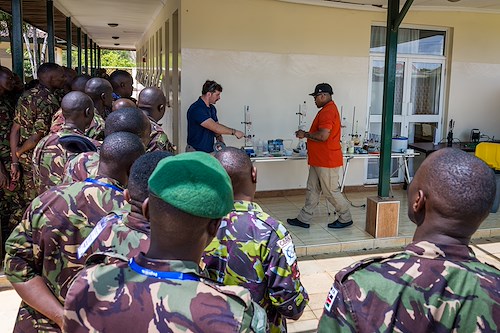
View Gallery Gallery contains 6 images × Photo 1 of 6 U.S. Army Southern European Task A U.S. Navy Explosive Ordnance Disposal (EOD) instructor, along with experts from U.S. Africa Command’s (USAFRICOM) Technical Support Group, and the U.S. Bureau of Alcohol, Tobacco, Firearms and Explosives, provides chemical and biological hazard training to Kenyan Disaster Response Battalion personnel during exercise Justified Accord 2025 (JA25) at the Humanitarian Peace Support School in Nairobi, Kenya, Feb. 13, 2025. The training included laboratory setup identification, protective measures and safe sampling techniques to mitigate risks associated with hazardous materials. JA25 is the premier USAFRICOM exercise in East Africa, designed to enhance multinational combat readiness, strengthen crisis response capabilities and empower allies and partners in the region. Led by U.S. Army Southern European Task Force, Africa (SETAF-AF) and hosted by Kenya, Djibouti and Tanzania, JA25 integrates high-intensity training scenarios that sharpen warfighting skills, increase operational reach and enhance the ability to execute complex joint and multinational operations. The exercise runs from Feb. 10–21, 2025. (U.S. Army photo by Sgt. 1st Class Solomon Navarro) Photo 2 of 6 U.S. Army Southern European Task Kenyan Disaster Response Battalion personnel conduct radiological detection training using a controlled source provided by the Kenyan Nuclear Regulatory Association during exercise Justified Accord 2025 (JA25) at the Humanitarian Peace Support School in Nairobi, Kenya, Feb. 14, 2025. Under the guidance of U.S. Navy Explosive Ordnance Disposal (EOD) instructors and U.S. Africa Command’s (USAFRICOM) Technical Support Group specialists, participants learned how to pinpoint radiological material safely, assess exposure risks and implement protective measures. The training builds upon more than a decade of U.S.-Kenya cooperation in strengthening chemical, biological, radiological and nuclear (CBRN) response capabilities. JA25 is the premier USAFRICOM exercise in East Africa, designed to enhance multinational combat readiness, strengthen crisis response capabilities and empower allies and partners in the region. Led by U.S. Army Southern European Task Force, Africa (SETAF-AF) and hosted by Kenya, Djibouti and Tanzania, JA25 integrates high-intensity training scenarios that sharpen warfighting skills, increase operational reach and enhance the ability to execute complex joint and multinational operations. The exercise runs from Feb. 10–21, 2025. (U.S. Army photo by Sgt. 1st Class Solomon Navarro) Photo 3 of 6 U.S. Army Southern European Task A U.S. Navy Explosive Ordnance Disposal (EOD) instructor, along with experts from U.S. Africa Command’s (USAFRICOM) Technical Support Group, and the U.S. Bureau of Alcohol, Tobacco, Firearms and Explosives, provides chemical and biological hazard training to Kenyan Disaster Response Battalion personnel during exercise Justified Accord 2025 (JA25) at the Humanitarian Peace Support School in Nairobi, Kenya, Feb. 13, 2025. The training included laboratory setup identification, protective measures and safe sampling techniques to mitigate risks associated with hazardous materials. JA25 is the premier USAFRICOM exercise in East Africa, designed to enhance multinational combat readiness, strengthen crisis response capabilities and empower allies and partners in the region. Led by U.S. Army Southern European Task Force, Africa (SETAF-AF) and hosted by Kenya, Djibouti and Tanzania, JA25 integrates high-intensity training scenarios that sharpen warfighting skills, increase operational reach and enhance the ability to execute complex joint and multinational operations. The exercise runs from Feb. 10–21, 2025. (U.S. Army photo by Sgt. 1st Class Solomon Navarro) Photo 4 of 6 U.S. Army Southern European Task A Kenya Defence Forces (KDF) soldier uses a detection wand to scan another KDF member for potential contamination during chemical, biological, radiological and nuclear (CBRN) training at the Humanitarian Peace Support School in Nairobi, Kenya, Feb. 18, 2025. Conducted as part of exercise Justified Accord 2025 (JA25), the training enhances KDF personnel’s ability to detect and mitigate hazardous threats in operational environments. JA25 is the premier U.S. Africa Command (USAFRICOM) exercise in East Africa, designed to enhance multinational combat readiness, strengthen crisis response capabilities and empower allies and partners in the region. Led by U.S. Army Southern European Task Force, Africa (SETAF-AF) and hosted by Kenya, Djibouti and Tanzania, JA25 integrates high-intensity training scenarios that sharpen warfighting skills, increase operational reach and enhance the ability to execute complex joint and multinational operations. The exercise runs from Feb. 10–21, 2025. (U.S. Army photo by Sgt. 1st Class Solomon Navarro) Photo 5 of 6 U.S. Army Southern European Task Kenya Defence Forces (KDF) soldiers conduct a chemical, biological, radiological and nuclear (CBRN) reconnaissance exercise during exercise Justified Accord 2025 (JA25) at the Humanitarian Peace Support School in Nairobi, Kenya, Feb. 18, 2025. Equipped with protective gear and detection equipment, the soldiers systematically searched a simulated hazardous environment to identify and mitigate potential threats. JA25 is the premier U.S. Africa Command (USAFRICOM) exercise in East Africa, designed to enhance multinational combat readiness, strengthen crisis response capabilities and empower allies and partners in the region. Led by U.S. Army Southern European Task Force, Africa (SETAF-AF) and hosted by Kenya, Djibouti and Tanzania, JA25 integrates high-intensity training scenarios that sharpen warfighting skills, increase operational reach and enhance the ability to execute complex joint and multinational operations. The exercise runs from Feb. 10–21, 2025. (U.S. Army photo by Sgt. 1st Class Solomon Navarro Photo 6 of 6 U.S. Army Southern European Task Keith Weatherspoon Jr., a chemical-biological software integrator with U.S. Africa Command’s (USAFRICOM) Technical Support Group, conducts training on chemical and biological warfare for Botswana Defence Force (BDF) partners and U.S. service members during exercise Justified Accord 2025 (JA25) at the Humanitarian Peace Support School in Nairobi, Kenya, Feb. 17, 2025. In this session, Weatherspoon explained a fentanyl lab scenario and mustard agent synthesis to enhance participants’ understanding of hazardous material threats and response procedures. JA25 is the premier USAFRICOM exercise in East Africa, designed to enhance multinational combat readiness, strengthen crisis response capabilities and empower allies and partners in the region. Led by U.S. Army Southern European Task Force, Africa (SETAF-AF) and hosted by Kenya, Djibouti and Tanzania, JA25 integrates high-intensity training scenarios that sharpen warfighting skills, increase operational reach and enhance the ability to execute complex joint and multinational operations. The exercise runs from Feb. 10–21, 2025. (U.S. Army photo by Sgt. 1st Class Solomon Navarro) NAIROBI, Kenya -- Imagine two scenarios.Scenario 1: Dawn breaks over the capital of Kenya. A U.S. diplomat leaves his residence for the embassy. After a 20-minute ride, his car arrives at the gate and he enters. He sits in his office to begin the day when, all of a sudden, he hears an explosion through the open window. It seems far off; it is not a large explosion. He thinks maybe it was just a car accident, but minutes later he smells something bitter in the air. His eyes water, sirens blare and a U.S. Marine Corps security detail enters his office wearing gas masks. They put a mask on him and tell him they must evacuate immediately because a deadly chemical is blowing over the compound. Scenario 2: U.S. intelligence receives credible information that radiological material is being loaded onto a ship in the Kenyan port city of Mombasa. Time is short and no one knows which ship, only that it will embark soon, possibly bound for the hands of violent extremists or other state actors looking to imperil the U.S. homeland. There is no time to send U.S. security forces to intercept the package. Instead, the Kenyan Disaster Response Battalion (DRB) mobilizes and arrives at the port. Using tactics and tools gained from years of training with the United States, they find the ship and the weapon, placed there by a violent extremist organization, and prevent its departure, defeating the threat to America and its citizens. Similar scenarios have happened before in other areas of the world. This is why a team of highly trained U.S. Chemical, Biological, Radiological and Nuclear (CBRN) experts participated in exercise Justified Accord 2025 (JA25) in Kenya to train together with Kenyan and Tanzanian CBRN military personnel. A key component of this effort is the 12-year relationship the Defense Threat Reduction Agency (DTRA) has fostered with the Kenya Defence Forces (KDF). “The goal of the relationship is rooted in a common desire to foster a CBRN response relationship in the region that enhances protection for the civilian population,” said U.S. Army Lt. Col. Eric Geiger, officer in charge for DTRA, U.S. Africa Command’s Technical Support Group. “This simultaneously empowers Kenya as they prepare to resolve any disaster, incident or crisis.” CBRN defense is a critical component of military preparedness, involving hazard detection, protection and mitigation. U.S., Kenyan and Tanzanian militaries, like most militaries, have specialized units and equipment dedicated to CBRN operations, including the use of protective gear, detection systems and decontamination procedures. These efforts safeguard troops and civilians from the harmful effects of CBRN agents in various operational environments. The effects of CBRN weapons can be devastating. The lasting impact to human suffering and the environment can leave communities, buildings, neighborhoods and towns completely uninhabitable. The capability to detect and respond to such CBRN threats is key for modern militaries looking to protect their forces and citizens. To become an expert in the field requires extensive training and rehearsals. Enter JA25. The exercise, held annually, is U.S. Africa Command’s premier military exercise in East Africa. It focuses on a range of readiness and warfighting topics from night air-to-ground integration, medical and veterinary operations and training, as well as live-fire exercises. This year it took place in Kenya, Tanzania and Djibouti with approximately 1,300 personnel from over 15 countries. Of that number, over 40 U.S., Kenyan, and Tanzanian CBRN professionals conducted scenario-based training focused on identifying and countering CBRN threats. “Events like these help us integrate together in a broader context. By being on site with other KDF members, we’re able to nest into the scenario and work closer with our counterparts,” said Geiger.JA25 enhanced the capabilities of Kenya’s DRB, a primary partner of the DTRA, both of whom are focused on building and expanding multinational CBRN warfighting capacity.“DRB is looking forward to growing its capability and footprint in different regions across the country so as to leverage response time to emerging threats,” said KDF Maj. Jackson Mwangi, officer in charge of the DRB’s search and rescue section.This is the second year of CBRN-focused events at Justified Accord. Whereas JA24 focused primarily on classroom academics, this year brought practical field work, leading to more comprehensive and robust scenarios forecasted for JA26. “Kenya is a growing leader in CBRN and crisis response and well on its way to becoming a regional hub of expertise and exporter of this critical capability,” said Geiger. “This relationship has proven beneficial for both sides as we’ve grown together in our readiness and capability. The goal is for U.S. and partner forces to rely on Kenyan forces to not only manage CBRN issues in Kenya, but potentially deploy to help others in the region, including further abroad for missions with the United Nations or other coalitions. “Practicing and training in CBRN is a key part of readiness and warfighting,” said Mwangi. “This enables the KDF, U.S. and partner forces to protect our forces, citizens and civilians.” This year, participants dove deeper than previous iterations.Academic exchanges covered chemical and biological threats, decontamination and ways to refine sampling techniques. Radiological protection and detection courses included scenario-based collaboration, providing exercise participants with an understanding of each other’s capability, techniques and procedures.The next phase featured several days of using tactics and training on equipment to find actual radiological sources, provided by the Kenyan Nuclear Regulatory Agency. This brought increased realism to the exercise, enabling all participants to enhance their own expertise.The final phase of training focused on a simulated CBRN event resulting in mass casualties, the need to identify the substance and mitigate its effects. “Having this training here during JA25 has been critical for the DRB,” said Mwangi, “Working with other experts, learning together and putting into practice tactics and procedures on the right equipment makes us a better force, ready and able to detect threats and if needed, resolve CBRN events if they occur. While the scenarios presented in the beginning are possible, opportunities like JA25 offer help ensure CBRN attacks are prevented or can be addressed rapidly. “It’s training and practice that furthers readiness in this field, making it more likely U.S., Kenyan and other partners will have the skills and capability required to deter and defeat the will of those who wish to bring such tragic harm,” said Geiger.(Courtesy article by U.S. Africa Command's Pat Foughty)

Continue ReadingUS, Kenya prepare for the unimaginable CBRN threat

36th Annual International Military Chiefs of Chaplains Conference and First Chaplain Africa Forum held in Brussels

View Gallery Gallery contains 1 image × Photo 1 of 1 africom_logo_jpgrelease_thumbnail The U.S. European Command (EUCOM) and Belgian Ministry of Defence, in partnership with U.S. Africa Command (AFRICOM) and U.S. Indo Pacific Command (INDOPACOM) Chaplain Directorates, hosted the world’s largest annual meeting of senior military religious leaders at the 36th Annual NATO & Partner International Military Chiefs of Chaplains Conference (IMCCC) in Brussels, Belgium, January 27-31, 2025.Over 200 military chaplains, academic experts, and special guests participated, representing 43 nations and more than 30 religious denominations. This year's gathering included a special Africa Summit hosted by AFRICOM, highlighting the role of chaplains in fostering regional stability through spiritual and ethical leadership. Delegates divided into working groups to share information, identify training needs and areas cooperation, and update their future engagement plans."This conference has not only strengthened our bonds across nations but has also underscored the indispensable role of chaplains in modern military operations, particularly in fostering resilience and ethical leadership in Africa and beyond." said Major General Kenneth Ekman, DOD West Africa Coordination Lead, AFRICOM. AFRICOM’s Command Chaplain, U.S. Army Chaplain Colonel Karen Meeker said, "Our engagement at the IMCCC and the Africa Forum is crucial for developing a comprehensive approach to chaplaincy that resonates with the unique cultural and spiritual landscapes of Africa, ensuring our chaplains are well-prepared to support our service members and their families."Experts from the United Nations, European Union, NATO, Belgium Armed Forces and other organizations briefed attendees on topics such as conflict resolution, interoperability and the importance of interworld view dialogue for achieving peace. Delegates collaborated to identify areas of cooperation and update their future engagement plans.EUCOM Command Chaplain, Colonel Christopher LaPack, shared, “First, I want to sincerely thank EUCOM’s co-hosts for this year’s IMCCC. The Belgian Planning Team, led by Chief Chaplain Hans De Cuester, provided a world-class forum for what turned out to be the biggest-ever IMCCC. I have no doubt that the engagements that took place this week will improve future interoperability amongst our chaplaincies. The change in security environment and NATO’s military posture in response to Russian aggression in the region means that our nations’ warfighters are more integrated than ever before. Military chaplains must be properly trained and ready to respond to the religious and spiritual needs of military personnel serving in multinational formations.”The Africa Forum agenda also highlighted the role of chaplains in the DoD State Partnership Program (SPP), which partners National Guard forces from the United States with militaries around the world. Chaplain General Henry Matifeyo, Zambian Ministry of Defence said, "The discussions here, especially the tri-lateral meetings, have opened new avenues for cooperation. We are keen on building a network that not only strengthens our chaplaincy but also addresses critical issues like PTSD and moral injury through a multi-disciplinary lens."The IMCCC began in 1990 when the USEUCOM chaplain’s office convened twelve senior NATO military chaplains in order to provide a forum for dialogue to enhance interoperability among NATO chaplaincies, facilitate mutual support, and ensure professional pastoral care is available to all Allied Forces during combat or crisis circumstances. Over time, its scope has expanded to enhance religious affairs interoperability, strengthen international relations, support warfighter and family resilience, improve spiritual advisement for commanders, and promote religious freedom. The IMCCC 2025 has grown into a forum that includes not just European military religious leaders but also leaders from Africa, Asia and North America to share ideas and practices that support the collective security mission on a global scale. This year's focus on Africa was a step forward in recognizing and addressing the unique needs of this diverse continent.List of national chaplaincies that participated in the 2025 conference: Armenia, Australia, Austria, Belgium, Bosnia & Herzegovina, Burkina Faso, Botswana, Canada, Cote d’Ivoire, Cyprus, Czechia, Estonia, Eswatini, Finland, France, Gabon, Georgia, Germany, Ghana, Greece, Italy, Kenya, Kosovo, Latvia, Lithuania, Malawi, , Netherlands, Nigeria, Norway, Poland, Serbia, , Slovenia, South Africa, South Korea, , Switzerland, United Kingdom, United States, and Zambia.

Continue Reading36th Annual International Military Chiefs of Chaplains Conference and First Chaplain Africa Forum held in Brussels