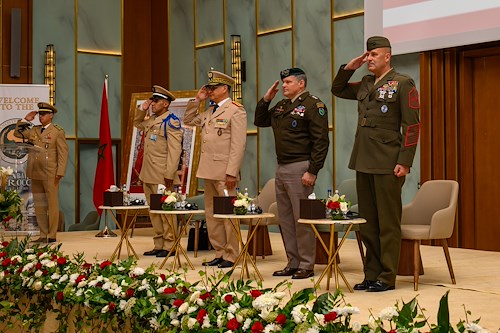
AFRICOM Deputy Commander Visits Libya, announces Libyan participation in Exercise Flintlock 2026

View Gallery Gallery contains 1 image × Photo 1 of 1 B3 and CDA announce FL26 STUTTGART, Germany – Libya will play a pivotal role in U.S. Africa Command’s (AFRICOM) flagship special operations forces exercise, Flintlock 26.  AFRICOM is working closely with Libyan military officials from the west and east to hold a key training location – or “spoke” – near the central Libyan city of Sirte in spring of 2026.  The participation of western and eastern Libyan forces together marks a significant step forward in Libyan efforts towards unification of military institutions and enabling strong U.S.-Libya security cooperation.The announcement came during the visit of Lt. Gen. John Brennan, U.S. Africa Command Deputy Commander, who spent the week in Tripoli and Sirte speaking with Libyan leadership from the west and east. Flintlock, led by Special Forces Command Africa, brings together allied and partner nations to enhance interoperability and strengthen the ability to conduct Counter Terror (CT) operations. This year, Italy’s Special Operations Command will enable the planning and execution of the Libya spoke, alongside spokes in Mauritania and Cote d’Ivoire. The opportunity for the joint training stems from modifications to the Libya arms embargo in January 2025, which enabled security cooperation – including training – with Libyan security forces from west and east, specifically for the purpose of reunification. “Flintlock 26 will be a tangible demonstration of our growing partnership with Libyan military officers in both the west and east,” said Brennan. “This exercise isn’t just about military training; it’s about overcoming divisions, building capacity, and supporting Libya’s sovereign right to determine its own future. By working alongside Libyans from the west and the east, we’re directly contributing to Libyan efforts to unify their military institutions.” Brennan took time to express AFRICOM’s gratitude to the Libyan people and leaders for their partnership in hosting this vital exercise.  “The support and coordination from Libyan leaders from the east and west, alongside the leadership of Italy, are crucial to the success of Flintlock 26. We have a growing and valuable partnership with Libyan forces from throughout the country, and we look forward to conducting training that directly supports Libyan reunification efforts,” said Brennan.  The Libya spoke in Flintlock 26 will leverage the U.S.-Libya partnership and bring other partners from across Africa and Europe to focus on sharpening skills and promoting peace through strength to deter terrorists and malign actors looking to cause instability and conflict.   The exercise will strengthen the partnership and add to Libya’s counter terror capabilities, helping to increase stability and opportunities for U.S. investment. “I was pleased to join Lt. Gen. Brennan for this important visit as U.S. military forces work with Libyan partners from the east and west to host a key location for Exercise Flintlock in Libya for the first time.  The exercise will support Libyan efforts to unify military institutions and develop the capability to take full responsibility for their own security,” said Jeremy Berndt, Chargé d’Affaires of the U.S. Embassy to Libya, who was also at the announcement. “Unity, peace, and stability are key elements to enable economic investment and increase prosperity for the Libyan people and their international partners.” U.S. Africa Command is one of seven U.S. Department of Defense geographic combatant commands. The command is responsible for all U.S. military operations, exercises, security cooperation, and conducts crisis response on the African continent in order to advance U.S. interests and promote regional security, stability, and prosperity. For more information, visit our website, Facebook and Twitter pages, or contact U.S. Africa Command Media Relations at [email protected]

Continue ReadingAFRICOM Deputy Commander Visits Libya, announces Libyan participation in Exercise Flintlock 2026

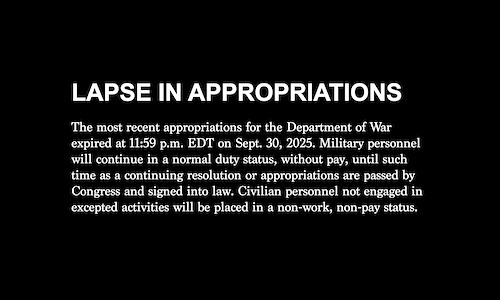
Lapse In Appropriations

View Gallery Gallery contains 1 image × Photo 1 of 1 Lapse In Appropriations The most recent appropriations for the Department of War expired at 11:59 p.m. EDT on Sept. 30, 2025. Military personnel will continue in a normal duty status, without pay, until such time as a continuing resolution or appropriations are passed by Congress and signed into law. Civilian personnel not engaged in excepted activities will be placed in a non-work, non-pay status. The most recent appropriations for the Department of War expired at 11:59 p.m. EDT on Sept. 30, 2025. Military personnel will continue in a normal duty status, without pay, until such time as a continuing resolution or appropriations are passed by Congress and signed into law. Civilian personnel not engaged in excepted activities will be placed in a non-work, non-pay status.

Continue ReadingLapse In Appropriations

U.S. Africa Command and Zambia CIV-MIL Partnership Brings Mobile Laboratories to Southern Africa: A Game Changer for Infectious Disease Outbreak Response

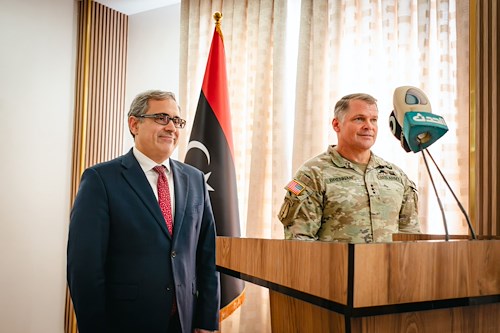
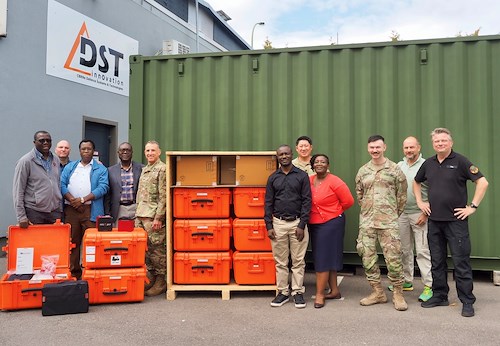
View Gallery Gallery contains 3 images × Photo 1 of 3 U.S. Africa Command and Zambia CIV-MIL Partnership Brings Mobile Laboratories to Southern Africa: A Game Changer for Infectious Disease Outbreak Response Three state-of-the-art mobile biological threat detection laboratories arrived in Zambia at the end of September and are poised to modernize infectious disease outbreak response across nine southern African nations. This vital initiative, a collaborative effort between Zambia’s National Public Health Institute under the Ministry of Health, U.S. Africa Command’s Office of the Command Surgeon, and the U.S. Embassy in Zambia, is set to dramatically shorten response times and improve the overall capacity to combat and contain potentially devastating outbreaks. Photo 2 of 3 U.S. Africa Command and Zambia CIV-MIL Partnership Brings Mobile Laboratories to Southern Africa: A Game Changer for Infectious Disease Outbreak Response Three state-of-the-art mobile biological threat detection laboratories arrived in Zambia at the end of September and are poised to modernize infectious disease outbreak response across nine southern African nations. This vital initiative, a collaborative effort between Zambia’s National Public Health Institute under the Ministry of Health, U.S. Africa Command’s Office of the Command Surgeon, and the U.S. Embassy in Zambia, is set to dramatically shorten response times and improve the overall capacity to combat and contain potentially devastating outbreaks. Photo 3 of 3 U.S. Africa Command and Zambia CIV-MIL Partnership Brings Mobile Laboratories to Southern Africa: A Game Changer for Infectious Disease Outbreak Response Three state-of-the-art mobile biological threat detection laboratories arrived in Zambia at the end of September and are poised to modernize infectious disease outbreak response across nine southern African nations. This vital initiative, a collaborative effort between Zambia’s National Public Health Institute under the Ministry of Health, U.S. Africa Command’s Office of the Command Surgeon, and the U.S. Embassy in Zambia, is set to dramatically shorten response times and improve the overall capacity to combat and contain potentially devastating outbreaks. In a significant boost to regional health security, three state-of-the-art mobile biological threat detection laboratories are arriving in Zambia and poised to modernize infectious disease outbreak response across nine southern African nations—Zambia, the Democratic Republic of Congo (DRC), Angola, Namibia, Botswana, Zimbabwe, Mozambique, Malawi, and Tanzania.  This vital initiative, a collaborative effort between Zambia’s National Public Health Institute under the Ministry of Health, U.S. Africa Command’s Office of the Command Surgeon, and the U.S. Embassy in Zambia, is set to dramatically shorten response times and improve the overall capacity to combat potentially devastating outbreaks including, but not limited to viral hemorrhagic fevers such as Ebola, Lassa and Lujo viruses as well as deadly zoonotic infections such as Anthrax, Brucellosis and Avian influenza.  The delivery represents a strategic approach to global health security that emphasizes burden sharing and equipping partner nations to quickly and effectively respond to regional health crises with minimal U.S. involvement. At the end of August, the U.S. and Zambian delegations visited Buchen, Germany, to inspect and receive the mobile labs developed by DST Innovation and Protection. Afterward, the group traveled to the Friedrich-Löffler Institute (FLI) in Greifswald, Germany, a leading institution in animal disease prevention, diagnosis, and control, to explore future collaboration opportunities. Subsequently, the labs were shipped to Zambia and are expected to arrive by the end of September. "This initiative is about building capacity and is a testament to the importance of multinational partnerships, in this case between the United States, Zambia and Germany. The work we’ve done over the past several years is a game changer," said Col. Michael Cohen, AFRICOM’s Command Surgeon. "By investing in the health security of our partners, we not only help them protect their populations and economies, but we also help stop outbreaks before they hit borders or travel to the United States.” "The ability to rapidly identify and confirm infectious diseases in a safe manner is paramount in preventing widespread outbreaks," explained Permanent Secretary Dr Kennedy Lishimpi, of the Zambian Ministry of Health. "Previously, we were often playing catch-up, reacting to an outbreak instead of proactively managing it. These advanced mobile labs represent a critical shift in our strategy."  The Director General of Zambia’s National Public Health Institute, Professor Roma Chilengi, actively engaged in the exchange and highlighted the country’s broad commitment to enhancing public health resilience and ensuring the well-being of its citizens. The partnership further contributes to the safety of U.S. Forces operating and training in Africa, ensuring they remain healthy. At least one of the labs will also be used during multi-nation training exercises, providing for the continued readiness of U.S. and African forces and medical personnel. Proven and durable, the mobile labs have been extensively used by the European Union since 2014’s West Africa Ebola virus outbreak. These self-contained labs are designed for rapid deployment in austere environments, can be fully operational within two hours, are equipped with 20,000 critical items for identifying, treating, and reporting infectious diseases, and are designed for self-sufficiency for up to three weeks. Importantly, this capability significantly reduces the time required to obtain critical diagnostic results – with a turnaround time of just one to two days. For years, African countries have grappled with the challenges of rapidly identifying and containing infectious diseases. Diagnosis often involves lengthy journeys to centralized labs and long waits for results, sometimes stretching 10 to 12 days. Delays proved detrimental during outbreaks like the 2014 Ebola virus crisis in Liberia, hindering initial containment measures and contributing to the spread of the virus, explained Maj. John Saindon, Force Health Security for the Office of the Command Surgeon, who deployed to the country at the time. The United States, he said, ultimately committed nearly 3,500 military personnel to counter the outbreak.This multinational initiative not only focuses on human health, but also extends to animals and agriculture, taking on a One Health approach to outbreak prevention and mitigation. Animal outbreaks often pose a dual threat: spreading to humans and triggering crisis.  Zambia, like many nations in the region, is concerned about zoonotic diseases that can spread from animals to humans. For example, the country has experienced outbreaks of anthrax in hippos, a situation that poses a significant threat to individuals who may risk eating infectious hippo meat due to food insecurity, thus contracting anthrax. Also, bordering countries to Zambia have experienced recent Ebola virus outbreaks, most recently Uganda (2024) and Democratic Republic of Congo (2025). The Command Surgeon’s efforts directly support AFRICOM's Strategy, Engagement and Program Directorate and AFRICOM’s broader Campaign Plan, specifically addressing national security objectives and crisis response. The two directorates, along with the U.S. Embassy in Zambia, worked with the nation on the collaborative program.  “We are pleased to partner with the Zambia National Public Health Institute on this project towards increasing Zambia’s capacity to tackle critical threats to global health security,” said Lt. Col. Matthew Yan, Defense Attaché for the U.S. Embassy in Zambia. “The delivery of these mobile infectious disease testing laboratories is a testament to the U.S. government’s continued support to the Zambian government in the health space. USAFRICOM’s work directly supports comprehensive efforts for health security alongside our inter-agency partners, like the U.S. Centers for Disease Control, who have built a robust cooperative relationship with ZNPHI.”  In addition to AFRICOM’s delivery of the mobile biological threat detection laboratories to southern Africa, the U.S. Army Southern European Task Force Africa’s (SETAF-AF) Surgeon Cell and Angolan Military Health Division medics also conducted a military-to-military exchange at Hospital Military Principal, in Luanda, Angola, Sept. 22-25. The medical professionals shared best practices for infection control, epidemiology and trauma surgery techniques, focused on building U.S. and Angolan forces’ readiness and enabling Angola to lead regional health security initiatives. Ultimately, the engagement prepares SETAF-AF’s medical forces to respond to real-world crises, align with AFRICOM priorities and increase the unit’s knowledge about the U.S. Embassy’s Disaster Response Initiative. AFRICOM is one of seven U.S. geographic combatant commands, responsible for military engagement across 53 African countries. Working with partners and allies, the command counters malign actors and transnational threats, responds to crises, strengthens African security forces, and supports U.S. government efforts in Africa to advance U.S. national interests and promote regional security, stability, and prosperity.
Continue ReadingU.S. Africa Command and Zambia CIV-MIL Partnership Brings Mobile Laboratories to Southern Africa: A Game Changer for Infectious Disease Outbreak Response

AFRICA SHIELD 2025: Strengthening Counterproliferation Efforts Across Africa

View Gallery Gallery contains 7 images × Photo 1 of 7 Defense Threat Reduction Agency From August 4-6, 2025, DTRA's International Counterproliferation Program (ICP), in partnership with the EU CBRN CoE and UNICRI, hosted the AFRICA SHIELD 2025 Regional Counterproliferation Workshop in Rabat, Morocco. This inaugural workshop brought together nearly 100 participants from across the African continent, representing law enforcement, military, policy, and UNSCR-1540 national-level coordination. Photo 2 of 7 Defense Threat Reduction Agency From August 4-6, 2025, DTRA's International Counterproliferation Program (ICP), in partnership with the EU CBRN CoE and UNICRI, hosted the AFRICA SHIELD 2025 Regional Counterproliferation Workshop in Rabat, Morocco. This inaugural workshop brought together nearly 100 participants from across the African continent, representing law enforcement, military, policy, and UNSCR-1540 national-level coordination. Photo 3 of 7 Defense Threat Reduction Agency From August 4-6, 2025, DTRA's International Counterproliferation Program (ICP), in partnership with the EU CBRN CoE and UNICRI, hosted the AFRICA SHIELD 2025 Regional Counterproliferation Workshop in Rabat, Morocco. This inaugural workshop brought together nearly 100 participants from across the African continent, representing law enforcement, military, policy, and UNSCR-1540 national-level coordination. Photo 4 of 7 Defense Threat Reduction Agency From August 4-6, 2025, DTRA's International Counterproliferation Program (ICP), in partnership with the EU CBRN CoE and UNICRI, hosted the AFRICA SHIELD 2025 Regional Counterproliferation Workshop in Rabat, Morocco. This inaugural workshop brought together nearly 100 participants from across the African continent, representing law enforcement, military, policy, and UNSCR-1540 national-level coordination. Photo 5 of 7 Defense Threat Reduction Agency From August 4-6, 2025, DTRA's International Counterproliferation Program (ICP), in partnership with the EU CBRN CoE and UNICRI, hosted the AFRICA SHIELD 2025 Regional Counterproliferation Workshop in Rabat, Morocco. This inaugural workshop brought together nearly 100 participants from across the African continent, representing law enforcement, military, policy, and UNSCR-1540 national-level coordination. Photo 6 of 7 Defense Threat Reduction Agency From August 4-6, 2025, DTRA's International Counterproliferation Program (ICP), in partnership with the EU CBRN CoE and UNICRI, hosted the AFRICA SHIELD 2025 Regional Counterproliferation Workshop in Rabat, Morocco. This inaugural workshop brought together nearly 100 participants from across the African continent, representing law enforcement, military, policy, and UNSCR-1540 national-level coordination. Photo 7 of 7 Defense Threat Reduction Agency From August 4-6, 2025, DTRA's International Counterproliferation Program (ICP), in partnership with the EU CBRN CoE and UNICRI, hosted the AFRICA SHIELD 2025 Regional Counterproliferation Workshop in Rabat, Morocco. This inaugural workshop brought together nearly 100 participants from across the African continent, representing law enforcement, military, policy, and UNSCR-1540 national-level coordination. From August 4-6, 2025, DTRA's International Counterproliferation Program (ICP), in partnership with the EU CBRN CoE and UNICRI, hosted the AFRICA SHIELD 2025 Regional Counterproliferation Workshop in Rabat, Morocco. This inaugural workshop brought together nearly 100 participants from across the African continent, representing law enforcement, military, policy, and UNSCR-1540 national-level coordination.The workshop focused on enhancing cooperation and building capacity to counter the proliferation of WMD and related materials. Participants engaged in discussions on international best practices, shared information on key programs and initiatives, and explored ways to strengthen counterproliferation efforts across the region.Key topics covered included: • Border Management and Supply Chain Security: Addressing challenges such as regional smuggling by non-state actors, border crossing control procedures, and the secure transportation and storage of illicit goods and dual-use items. • Intelligence Flow and Incident Response Management: Improving information sharing and coordination to effectively respond to potential WMD/CBRN incidents. • Export Controls and Dual-Use Technologies: Strengthening regulatory frameworks and enforcement mechanisms to prevent the illicit transfer of sensitive materials. • CBRN Crime Investigation and Counter-Proliferation Financing: Developing specialized investigative skills and disrupting financial networks that support proliferation activities.AFRICA SHIELD 2025 provided a valuable platform for participants to broaden their knowledge, identify regional capability gaps, and forge connections with fellow counterproliferation professionals.This workshop underscores DTRA's ongoing commitment to partnering with African nations to strengthen global security and counter the threat of WMD proliferation. We extend our thanks to all participants and partners for their contributions to a successful event.

Continue ReadingAFRICA SHIELD 2025: Strengthening Counterproliferation Efforts Across Africa

U.S. Africa Command Conducts Change of Command Ceremony

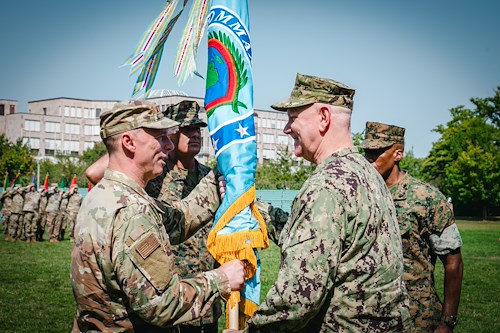
View Gallery Gallery contains 8 images × Photo 1 of 8 U.S. Africa Command Air Force Gen. Dagvin R.M. Anderson receives the flag from Navy Admiral Christopher W. Grady, Vice Chairman of Joint Chief of Staff, during the U.S. Africa Command Change of Command ceremony on Kelley Barracks on Stuttgart, Germany on August 15, 2025. The ceremony marked a formal transition of leadership for U.S. Africa Command, which oversees U.S. military operations and partnerships across the African continent. AFRICOM is one of seven U.S. geographic combatant commands, responsible for military engagement across 53 African countries. Working with partners and allies, the command counters malign actors and transnational threats, responds to crises, strengthens African security forces, and supports U.S. government efforts in Africa to advance U.S. national interests and promote regional security, stability, and prosperity. (U.S. AFRICOM photo by Staff Sgt. Emely Eckels) Photo 2 of 8 ZRF_7988 (2) Photo 3 of 8 U.S. Africa Command Air Force Gen. Dagvin R.M. Anderson salutes his formation during the U.S. Africa Command Change of Command ceremony on Kelley Barracks on Stuttgart, Germany on August 15, 2025. The ceremony marked a formal transition of leadership for U.S. Africa Command, which oversees U.S. military operations and partnerships across the African continent. AFRICOM is one of seven U.S. geographic combatant commands, responsible for military engagement across 53 African countries. Working with partners and allies, the command counters malign actors and transnational threats, responds to crises, strengthens African security forces, and supports U.S. government efforts in Africa to advance U.S. national interests and promote regional security, stability, and prosperity. (U.S. AFRICOM photo by Staff Sgt. Emely Eckels) Photo 4 of 8 U.S. Africa Command Marine Corps Gen. Michael E. Langley salutes the formation during the U.S. Africa Command Change of Command ceremony on Kelley Barracks on Stuttgart, Germany on August 15, 2025. The ceremony marked a formal transition of leadership for U.S. Africa Command, which oversees U.S. military operations and partnerships across the African continent. AFRICOM is one of seven U.S. geographic combatant commands, responsible for military engagement across 53 African countries. Working with partners and allies, the command counters malign actors and transnational threats, responds to crises, strengthens African security forces, and supports U.S. government efforts in Africa to advance U.S. national interests and promote regional security, stability, and prosperity.. (U.S. AFRICOM photo by Staff Sgt. Emely Eckels) Photo 5 of 8 20250815-ZRF03269 Photo 6 of 8 U.S. Africa Command United States Army Garrison Stuttgart Military Police fire a salute battery during the U.S. Africa Command Change of Command ceremony on Kelley Barracks on Stuttgart, Germany on August 15, 2025. The ceremony marked a formal transition of leadership for U.S. Africa Command, which oversees U.S. military operations and partnerships across the African continent. AFRICOM is one of seven U.S. geographic combatant commands, responsible for military engagement across 53 African countries. Working with partners and allies, the command counters malign actors and transnational threats, responds to crises, strengthens African security forces, and supports U.S. government efforts in Africa to advance U.S. national interests and promote regional security, stability, and prosperity. (U.S. AFRICOM photo by Staff Sgt. Emely Eckels) Photo 7 of 8 U.S. Africa Command United States Army Garrison Stuttgart Military Police fire a salute battery during the U.S. Africa Command Change of Command ceremony on Kelley Barracks on Stuttgart, Germany on August 15, 2025. The ceremony marked a formal transition of leadership for U.S. Africa Command, which oversees U.S. military operations and partnerships across the African continent. AFRICOM is one of seven U.S. geographic combatant commands, responsible for military engagement across 53 African countries. Working with partners and allies, the command counters malign actors and transnational threats, responds to crises, strengthens African security forces, and supports U.S. government efforts in Africa to advance U.S. national interests and promote regional security, stability, and prosperity. (U.S. AFRICOM photo by Staff Sgt. Emely Eckels) Photo 8 of 8 20250815-ZRF03231 U.S. Africa Command (AFRICOM) held a Change of Command ceremony August 15 at Kelley Barracks in Stuttgart, Germany, as Marine Corps General Michael E. Langley formally transferred command to Air Force General Dagvin R.M. Anderson.Navy Adm. Christopher Grady, Vice Chairman of the Joint Chiefs of Staff, presided over the ceremony. In his remarks, Grady emphasized AFRICOM’s role in advancing U.S. national security and strengthening defense relationships across Africa. He highlighted the importance of sustained U.S. efforts in regions such as the Horn of Africa, West Africa, and the Sahel."The region covered by U.S. AFRICOM has a rapidly growing economy and a young population that offers a democratic dividend," said Grady. "Meanwhile, militarily, the theater is a nexus where global competitors test our resolve, where violent extremist organizations seek sanctuary. And where instability ripples far beyond the continent. By working side by side with our African partners, we learn from them and help them strengthen their own defenses.”Anderson, a pilot with over 3,400 flight hours—including 738 in combat, assumed command during the ceremony. He brings experience in agile, intelligence-driven operations and joint force planning. His previous assignments include Director for Joint Force Development on the Joint Staff and leading Special Operations Command–Africa and Joint Task Force–Quartz. "I am not new to the challenges of Africa," said Anderson. "And I am incredibly familiar with the rising threats around the world that are vying for influence on the continent, seeking to destabilize and undo the world order that we enjoy [while undermining] the way of life that we all defend."Langley took command in August 2022. During his tenure, AFRICOM focused on strengthening partner capacity, sharpening operational readiness, and enhancing interoperability with African and allied forces. These efforts reinforced regional stability and positioned U.S. forces to respond rapidly to emerging threats. Langley also guided the command through a period of heightened global competition and regional turbulence with a steady emphasis on African-led approaches to security."We come up with solutions, African led solutions. That's what AFRICOM is about," said Langley. “This is a bittersweet opportunity, giving up this great command, but I pass it on to a great man...Dag, this team will not disappoint. You will take them to the next level."AFRICOM’s mission remains focused on working with African and international partners to counter transnational threats and malign actors, strengthen security forces, and respond to crises in order to advance U.S. national interests and promote regional stability and prosperity.AFRICOM is one of seven U.S. geographic combatant commands, responsible for military engagement across 53 African countries. Working with partners and allies, the command counters malign actors and transnational threats, responds to crises, strengthens African security forces, and supports U.S. government efforts in Africa to advance U.S. national interests and promote regional security, stability, and prosperity.
Continue ReadingU.S. Africa Command Conducts Change of Command Ceremony

West Africa Logistics Conference Hosted by U.S. Africa Command, Armed Forces of Liberia

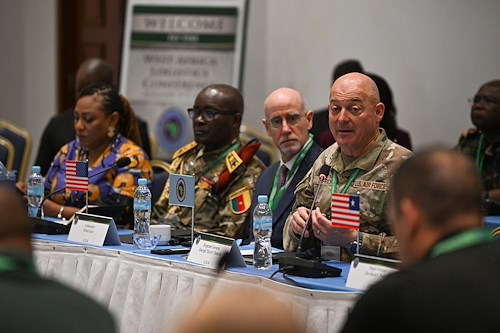
View Gallery Gallery contains 7 images × Photo 1 of 7 dsc0584 Photo 2 of 7 dsc0809 Photo 3 of 7 dsc0756 Photo 4 of 7 dsc0841 Photo 5 of 7 dsc1007 Photo 6 of 7 dsc1114 Photo 7 of 7 dsc0305 MONROVIA, Liberia – U.S. Africa Command and the Armed Forces of Liberia concluded the West Africa Logistics Conference August 7, the latest in the series of events designed to organize how the U.S. and its partners in Africa source, stage, and move materiel throughout the continent.This year’s conference drew more than 90 attendees from 22 participating nations and organizations.“We expect this year’s conference to do even more than we’ve done before,” said U.S. Air Force Brig. Gen. George “Dutch” Dietrich, Director of Logistics, U.S. Africa Command. “The last two conferences were fantastic events to understand our shared strengths and our challenges, and most importantly, to devise quantifiable, measurable, objective solutions to those challenges.  I expect that this conference will take that even further.”Most Western Africa countries were represented at the conference, which also introduced newcomers from farther afield, including Morocco, Kenya, Algeria, and Botswana.   The strong participation reinforces the importance of logistics and the further development of the capabilities of these nations’ defense forces.“Amateurs plan tactics, professionals focus on logistics,” said Dietrich.  “It’s a testament to the professionalism of our co-hosts, the Armed Forces of Liberia, and all of the partners that are here, that they’ve taken the time to invest in coming here to have this very rich discussion on how we can continue to build on a strong foundation of logistics.”The conference grows the scope of several U.S. Africa Command sponsored tools, including the USAFRICOM African Mission Partners Environment, a virtual forum for hosting sharable information among African partners, especially information that’s critical to building out logistics networks across the region. By the end of the conference, the team added more than 50 new subscribers to the service, testifying to the long-term value of the tool.The AFRICOM logistics team also led a discussion on the Assess, Advise, Advocate and Integrate Operational Assessment Model, called A3I.  The model takes in self-reported logistics data from African partners—supply nodes, fuel points, and air strips, for example—to build a holistic assessment of regional strengths and capability gaps.Partners and team members then plan logistics capability growth efforts around those assessments, establishing specific, measurable, and achievable goals.“We’re refining the product to fully map out all of our capacities, identify gaps, and think about how those gaps can be bridged,” said Lt. Col. Samio Kortu, Chief of Logistics, Armed Forces of Liberia, discussing Liberia’s progress with the A3I model. “It’s a very useful tool that’s going to help enhance our capability.”For the first time at WALC, commercial vendors from the U.S. logistics industry engaged with the participants, supporting the A3I model’s objectives of advocating for solutions to overcoming capability gaps.  More than a dozen vendors from a broad swath of logistics disciplines were on hand to discuss challenges and solutions.The West Africa Logistics Conference stands out as an event that quantifies its success year-over-year, mapping the conference’s content and objectives to U.S. national interests and the capability growth of partner forces in Africa.  These mutual interests and the strengthening of partner logistics capacity intersect here, providing a natural forum for engagement.“Logistics underpin an effective military, and an effective military provides security for all of our countries,” said Ambassador Robert Scott, Deputy to the Commander for Civil-Military Engagement, U.S. Africa Command.“The whole world is gravitating toward this one threat of terrorism,” said Maj. Gen. Davidson Forleh, Chief of Staff, Armed Forces of Liberia. “What we’re doing here today… tomorrow you’ll see the general [Dietrich] and I in one foxhole, we’ll be fighting one common enemy.”“This conference is not about cents’ and dollars’ benefit,” said Forleh. “It’s about building the capacity, the human resource, because this is where we share experience.”AFRICOM is one of seven U.S. geographic combatant commands, responsible for military engagement across 53 African nations. Working with partners and allies, the command counters malign actors and transnational threats, responds to crises, strengthens African security forces, and supports U.S. government efforts in Africa to advance U.S. national interests and promote regional security, stability, and prosperity.
Continue ReadingWest Africa Logistics Conference Hosted by U.S. Africa Command, Armed Forces of Liberia

USAFE-AFAFRICA, Algeria Conduct Aeromedical Exchange

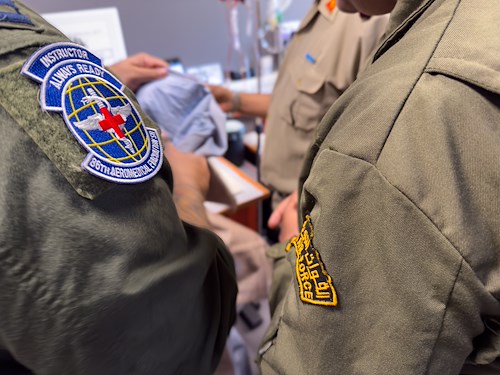
View Gallery Gallery contains 9 images × Photo 1 of 9 U.S. Air Forces in Europe and Ai U.S. Air Force and Algerian aeromedical teams examine patient medical gear during an Algerian aeromedical evacuation familiarization visit at Ramstein Air Base, Germany, July 17, 2025. The visit, led by the U.S. Air Forces in Europe – Air Forces Africa Command Surgeon’s Office of Global Health Engagements and the 86th Aeromedical Evacuation Squadron, provided an opportunity for the U.S. and Algerian medical teams to exchange knowledge and best practices, strengthening respective capabilities. Photo 2 of 9 U.S. Air Forces in Europe and Ai U.S. Air Force Staff Sgt. Jacob Livolsi, 86th Operational Medical Readiness Squadron aerospace medical technician, explains procedures for a medical evacuation bus during an Algerian aeromedical evacuation familiarization visit at Ramstein Air Base, Germany, July 15, 2025. The exchange, led by the U.S. Air Forces in Europe – Air Forces Africa Command Surgeon’s Office of Global Health Engagements and the 86th Aeromedical Evacuation Squadron, provided an opportunity to exchange knowledge and best practices between the U.S. and Algerian medical teams. Photo 3 of 9 U.S. Air Forces in Europe and Ai Algerian military personnel conduct a litter carry with a medical mannequin onto a static C-130 Hercules aircraft during an Algerian aeromedical evacuation familiarization visit at Ramstein Air Base, Germany, July 17, 2025. The familiarization visit, led by the U.S. Air Forces in Europe – Air Forces Africa Command Surgeon’s Office of Global Health Engagements and the 86th Aeromedical Evacuation Squadron, provided an opportunity to exchange aeromedical training and best practices, serving as a foundation for future military healthcare cooperation. Photo 4 of 9 U.S. Air Forces in Europe and Ai U.S. Air Force and Algerian aeromedical teams treat a robotic mannequin during a clinical simulation demonstration as part of an Algerian aeromedical evacuation familiarization visit at Ramstein Air Base, Germany, July 17, 2025. The visit, led by the U.S. Air Forces in Europe – Air Forces Africa Command Surgeon’s Office of Global Health Engagements and the 86th Aeromedical Evacuation Squadron, provided an opportunity to deepen the cooperative relationship and foster mutual understanding of aeromedical patient care practices. Photo 5 of 9 U.S. Air Forces in Europe and Ai An Algerian military member examines a 3D printed bone as U.S. Air Force Brenda Robinson, 86th Aeromedical Evacuation Squadron healthcare simulation operations specialist, briefs training and simulation capabilities during an Algerian aeromedical evacuation familiarization visit at Ramstein Air Base, Germany, July 17, 2025. The visit, led by the U.S. Air Forces in Europe – Air Forces Africa Command Surgeon’s Office of Global Health Engagements and the 86th Aeromedical Evacuation Squadron, provided an opportunity for the U.S. and Algerian medical teams to exchange knowledge and best practices, strengthening respective capabilities. Photo 6 of 9 U.S. Air Forces in Europe and Ai U.S. Air Force and Algerian aeromedical personnel secure a medical mannequin on a static C-130 Hercules during training as part of an Algerian aeromedical evacuation familiarization visit at Ramstein Air Base, Germany, July 17, 2025. The familiarization visit, led by the U.S. Air Forces in Europe – Air Forces Africa Command Surgeon’s Office of Global Health Engagements and the 86th Aeromedical Evacuation Squadron, provided an opportunity to exchange aeromedical training and best practices, serving as a foundation for future military healthcare cooperation. Photo 7 of 9 U.S. Air Forces in Europe and Ai U.S. Air Force Staff Sgt. Hunter Marnelos, 86th Aeromedical Evacuation Squadron aeromedical evacuation technician, explains U.S. checklist procedures to an Algerian medical member during an Algerian aeromedical evacuation familiarization visit at Ramstein Air Base, Germany, July 17, 2025. The familiarization visit, led by the U.S. Air Forces in Europe – Air Forces Africa Command Surgeon’s Office of Global Health Engagements and the 86th Aeromedical Evacuation Squadron, provided an opportunity to exchange aeromedical training and best practices, serving as a foundation for future military healthcare cooperation. Photo 8 of 9 U.S. Air Forces in Europe and Ai Algerian aeromedical personnel observe a U.S. Air Force 86th Aeromedical Evacuation Squadron technician and flight nurse simulate patient care during an Algerian aeromedical evacuation familiarization visit at Ramstein Air Base, Germany, July 17, 2025. The familiarization visit, led by the U.S. Air Forces in Europe – Air Forces Africa Command Surgeon’s Office of Global Health Engagements and the 86 Aeromedical Evacuation Squadron, provided an opportunity to exchange aeromedical training and best practices, serving as a foundation for future military healthcare cooperation. Photo 9 of 9 U.S. Air Forces in Europe and Ai U.S. Air Force Capt. Robert Ostrowski, 86th Aeromedical Evacuation Squadron flight nurse and instructor, demonstrates a medical scenario in the simulation lab during an Algerian aeromedical evacuation familiarization visit at Ramstein Air Base, Germany, July 17, 2025. The visit, led by the U.S. Air Forces in Europe – Air Forces Africa Command Surgeon’s Office of Global Health Engagements and the 86th Aeromedical Evacuation Squadron, provided an opportunity to deepen the cooperative relationship and foster mutual understanding of aeromedical patient care practices. RAMSTEIN AIR BASE, Germany – U.S. Air Force medical personnel from U.S. Air Forces in Europe – Air Forces Africa Command Surgeon’s Team, 86th Aeromedical Evacuation Squadron and Algerian medical and flight crew personnel collaborated to exchange best practices and patient care methods during an aeromedical evacuation familiarization visit at Ramstein Air Base, Germany, July 14–18.The visit, coordinated by the U.S. Embassy in Algeria and the USAFE-AFAFRICA Command Surgeon team, followed the signing of the U.S. and Algerian Military Cooperation Memorandum on Jan. 22, 2025, and underscored a shared commitment to interoperability, medical readiness, and the U.S.-Algeria defense cooperation.“We wanted to use this opportunity to exchange information and ideas with the Algerian team and have this visit be a steppingstone to more engagements in the future,” said Maj. Kolbey Parent, an international health specialist with USAFE-AFAFRICA CST Global Health Engagement.During the week-long first-ever bilateral medical exchange between the two nations, the five-person Algerian team participated in briefings and hands-on training across several aeromedical evacuation programs and systems, including:• En-Route Patient Staging System orientation, where U.S. personnel explained how NATO-standard equipment and litter capabilities support patient movement including a demonstration using the high-deck loading platform for KC-135 operations. • Medical simulation center training, where team members practiced patient care and movement scenarios in a controlled environment including stabilizing patients under simulated in-flight conditions • Static aircraft familiarization, involving hands-on training aboard a static C-130 Hercules to enhance understanding of patient loading procedures and in-flight care techniques“The team has been very interested, engaged, and open to sharing how they are able to work with us and to share their priorities and how they do things differently,” Parent said.The visit highlighted a shared commitment to aeromedical readiness, offering both teams a chance to exchange knowledge, understand each other’s approach and experience and strengthen their ability to work together.“The team has been amazing and a pleasure to work with,” Parent added. “We have had a lot to exchange. They bring a wealth of practical experience and learning from their approach helps us broaden our perspective, enhance our readiness and ultimately makes everyone better.”The U.S. and Algeria continue to look for opportunities to align defense interests within the construct of the recently signed MOU, to include a still to be scheduled planning event that will review engagement opportunities for the next year.

Continue ReadingUSAFE-AFAFRICA, Algeria Conduct Aeromedical Exchange

EUCOM/AFRICOM Host Joint Industry Forum

View Gallery Gallery contains 1 image × Photo 1 of 1 group_idjuly_9_2025 U.S. European Command and U.S. Africa Command partnered to host a Joint Industry Forum at Patch Barracks today. The event featured a series of briefings and a vendor showcase that brought together mission partners and industry to advance operational readiness. Briefing sessions were focused on EUCOM and AFRICOM’s critical capability needs, outlining technology requirements to close operational gaps. The event represented a way to connect industry innovation to the needs of real-world operations, said Ms. Sally Pfenning, director of EUCOM’s Requirements and Resource Integration Directorate."In today’s rapidly changing technological landscape, the speed at which we can identify, develop, and deploy new capabilities is critical. We can no longer afford to rely on traditional acquisition processes that take years to deliver results,” Pfenning said. As a co-sponsor of the forum, AFRICOM’s Director of Resources and Assessments Mr. Paul Landauer emphasized the strategic importance of pursuing engagement with emerging industry capabilities. “Innovation is critical to the strength and lethality of our forces, and it is a key way we can promote peace through strength here in the European and African theaters," Landauer said.The Joint Industry Forum continues tomorrow, with exhibitors featured at Kelley Barracks, home of USAFRICOM.

Continue ReadingEUCOM/AFRICOM Host Joint Industry Forum

Dr. Jason Womack Inspires Senior Enlisted Leaders with Visionary Leadership Framework at ASELC 2025 in Morocco

View Gallery Gallery contains 5 images × Photo 1 of 5 U.S. Africa Command Dr. Jason “JW” Womack, Senior Director for Organizational Engagement and Leader Development for the U.S. Space Force speaks during the 7th Africa Senior Enlisted Leader Conference in Rabat, Morocco on June 11, 2025. The conference, held from June 10–12, brought together over 130 senior enlisted leaders from the U.S. and 30 African nations to exchange best practices, address shared challenges, and build multinational partnerships. (U.S. Army photo by Staff Sgt. Emely Eckels) Photo 2 of 5 U.S. Africa Command Dr. Jason “JW” Womack, Senior Director for Organizational Engagement and Leader Development for the U.S. Space Force speaks during the 7th Africa Senior Enlisted Leader Conference in Rabat, Morocco on June 11, 2025. The conference, held from June 10–12, brought together over 130 senior enlisted leaders from the U.S. and 30 African nations to exchange best practices, address shared challenges, and build multinational partnerships. (U.S. Army photo by Staff Sgt. Emely Eckels) Photo 3 of 5 U.S. Africa Command Dr. Jason “JW” Womack, Senior Director for Organizational Engagement and Leader Development for the U.S. Space Force speaks during the 7th Africa Senior Enlisted Leader Conference in Rabat, Morocco on June 11, 2025. The conference, held from June 10–12, brought together over 130 senior enlisted leaders from the U.S. and 30 African nations to exchange best practices, address shared challenges, and build multinational partnerships. (U.S. Army photo by Staff Sgt. Emely Eckels) Photo 4 of 5 U.S. Africa Command Dr. Jason “JW” Womack, Senior Director for Organizational Engagement and Leader Development for the U.S. Space Force speaks during the 7th Africa Senior Enlisted Leader Conference in Rabat, Morocco on June 11, 2025. The conference, held from June 10–12, brought together over 130 senior enlisted leaders from the U.S. and 30 African nations to exchange best practices, address shared challenges, and build multinational partnerships. (U.S. Army photo by Staff Sgt. Emely Eckels) Photo 5 of 5 U.S. Africa Command Dr. Jason “JW” Womack, Senior Director for Organizational Engagement and Leader Development for the U.S. Space Force speaks during the 7th Africa Senior Enlisted Leader Conference in Rabat, Morocco on June 11, 2025. The conference, held from June 10–12, brought together over 130 senior enlisted leaders from the U.S. and 30 African nations to exchange best practices, address shared challenges, and build multinational partnerships. (U.S. Army photo by Staff Sgt. Emely Eckels) RABAT, Morocco – June 12, 2025 — On the final day of the 7th annual Africa Senior Enlisted Leaders Conference (ASELC), Dr. Jason “JW” Womack, Senior Director for Organizational Engagement and Leader Development for the U.S. Space Force, delivered a keynote that resonated with senior enlisted leaders from Africa and the United States.Held June 10–12 in Rabat, Morocco, and co-hosted by the Royal Moroccan Armed Forces and U.S. Africa Command, the conference brought together over 130 noncommissioned officers from 30 African nations and the United States to exchange best practices, discuss shared challenges, and strengthen multinational partnerships under the theme: Resilient, Adaptive, Transformative. Dr. Womack’s presentation served as a compelling capstone to the event, challenging attendees to rethink how their forces develop individuals and organizations in tandem, rather than in isolation.Titled The Seven Principles of Individual and Organizational Strength, Womack’s 25-minute session addressed the global challenge of creating military teams where personal growth aligns with mission effectiveness. Drawing on years of research and leadership development experience, he introduced a layered framework for building cohesive, high-performing units. The foundation of his approach emphasizes self-awareness, alignment with purpose, and social connection. These elements, he explained, help foster resilient individuals who can make sound decisions under pressure and stay grounded in values that transcend organizational politics.He then explored the importance of enhancing leadership insight through contextual intelligence and heritage wisdom. He encouraged attendees to examine their operational environments carefully and to draw strength from their military traditions and cultural legacies. Finally, he looked to the future, advocating for the development of strategic partnerships and cultivating future readiness—arguing that strong relationships should be built before they are needed, and that adaptive forces will be the most capable in unpredictable environments.Throughout his presentation, Womack made clear that his framework was not a prescriptive American model but a set of universal principles that can be adapted to each nation’s unique leadership culture. He noted that self-awareness looks different in communal versus individualistic societies, and that heritage wisdom takes on different forms depending on a nation's history and values. Rather than prescribing change, he urged leaders to reinforce what already works—by grounding it in intentional growth and cultural continuity.Womack’s session included an interactive reflection exercise, prompting participants to assess areas of connection and disconnection in their own units. He concluded by challenging leaders to engage their teams in two conversations: which principle needs strengthening on a personal level, and how personal development can support broader organizational goals. He emphasized that leadership development is not a one-time event, but an ongoing practice that builds resilience, adaptability, and unity over time.Other sessions on the final day included panels on African Leadership 2030 and What’s Next for African Enlisted Development. Participants responded to Womack’s message with discussion and reflection on its key themes.As ASELC 2025 drew to a close, Dr. Womack’s keynote left a lasting impression. His call to invest in connection, culture, and continuous leadership growth offered participants a fresh perspective on strengthening their forces—not just for today’s challenges, but for the generations of enlisted leaders to come.

Continue ReadingDr. Jason Womack Inspires Senior Enlisted Leaders with Visionary Leadership Framework at ASELC 2025 in Morocco

Morocco Hosts Conference to Enhance African Military Leadership

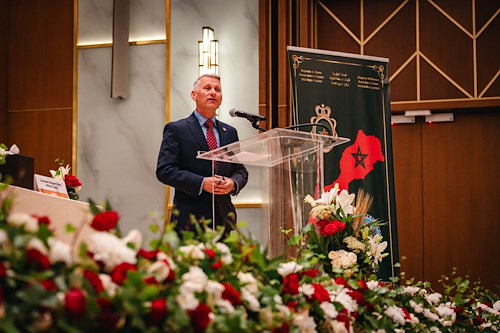
View Gallery Gallery contains 1 image × Photo 1 of 1 U.S. Africa Command Africa Senior Enlisted Leader Conference 2025 RABAT, Morocco, June 11, 2025—More than 130 enlisted leaders from the U.S. and 30 African countries convened in Rabat, Morocco, June 10-12, for the 7th Africa Senior Enlisted Leader Conference. Hosted by the Royal Moroccan Armed Forces and U.S. Africa Command, the conference provides a forum for senior noncommissioned officers to share best practices, discuss challenges, and strengthen partnerships. This year’s theme was “Resilient, Adaptive, Transformative.”  “Africa is a nexus theater—global interests converge on this continent,” said Marine Corps Sgt. Major Mike Woods, AFRICOM’s command senior enlisted leader. "No matter how advanced our militaries become, success depends on leaders at all levels inspiring their people—igniting a fire in their hearts—especially when it matters most.” U.S. Africa Command, with partners, counters transnational threats and malign actors, strengthens security forces and responds to crises in order to advance U.S. national interests and promote regional security, stability and prosperity. The Africa Senior Enlisted Conference advances that mission by fostering relationships and helping to advance the capabilities of America’s military partners on the continent. "Thirty African partners sent their finest non-commissioned officers to participate in the conference this year. Effective NCO leadership isn't just about training, it's about forging units capable of disrupting the enemy,” said Lt. General John Brennan. “By empowering those on the ground, our partners are better able to counter terrorism and secure their future." Last year's event was held in Lilongwe, Malawi. The first conference was held in 2017. ### 

Continue ReadingMorocco Hosts Conference to Enhance African Military Leadership